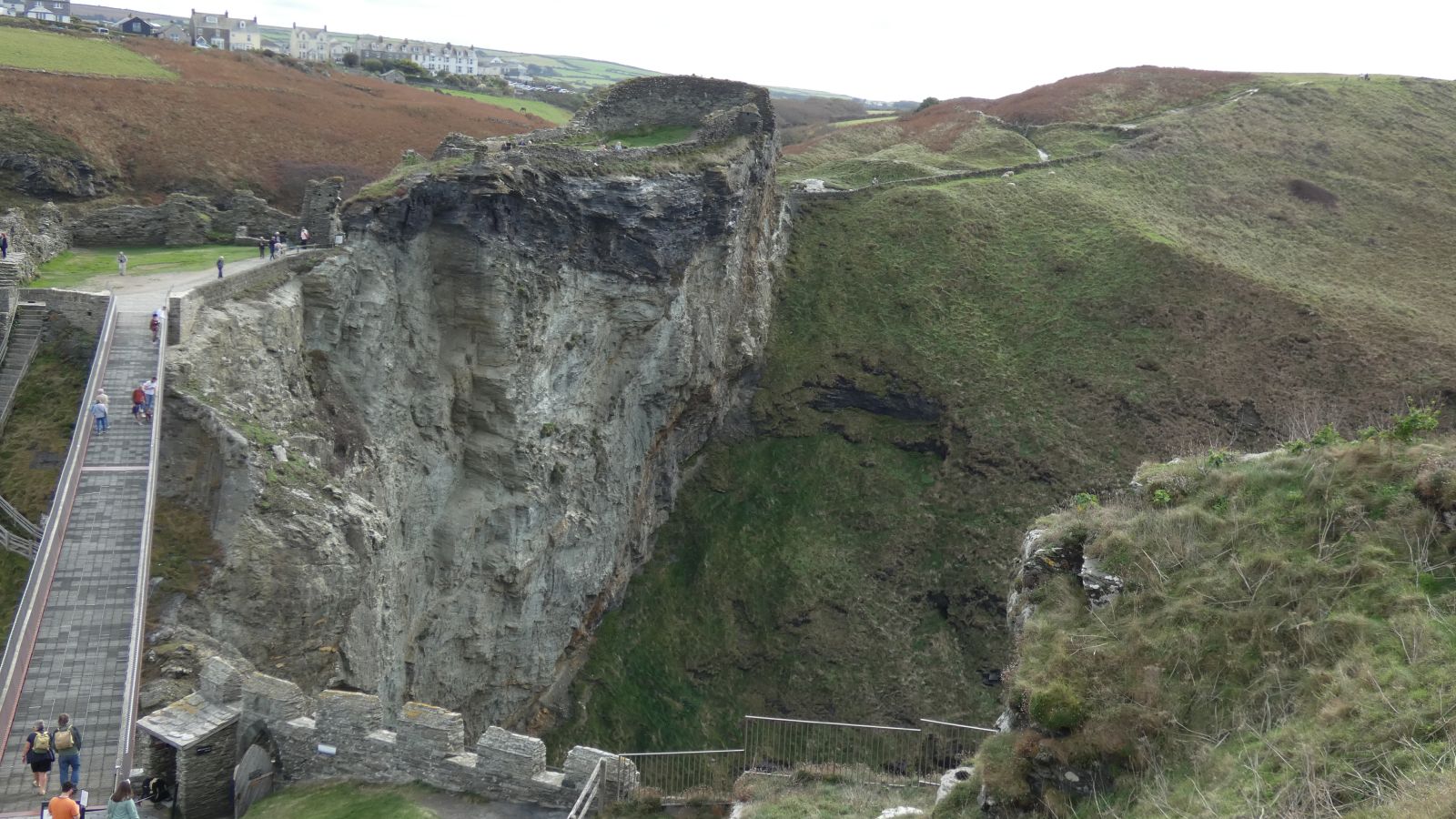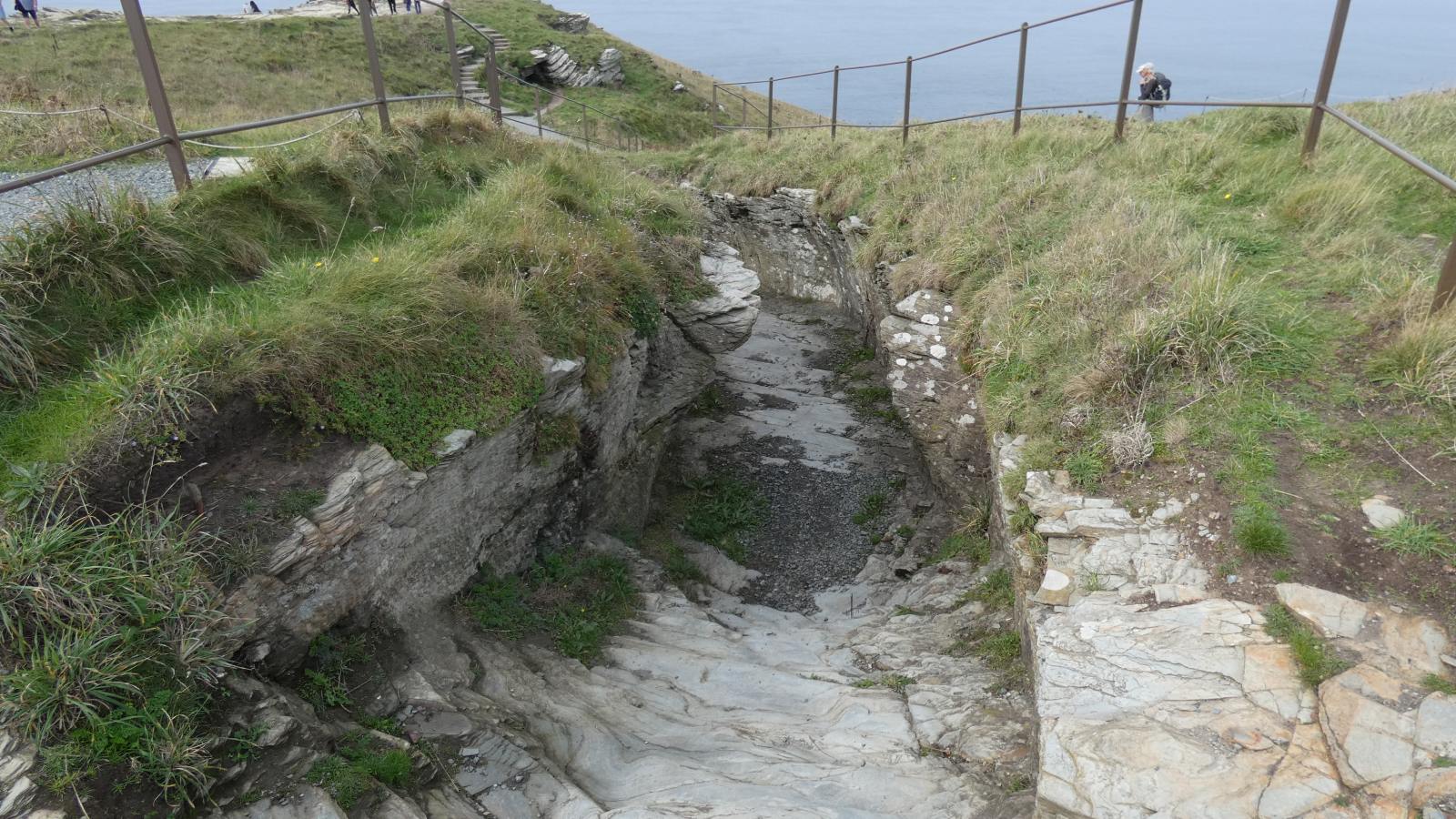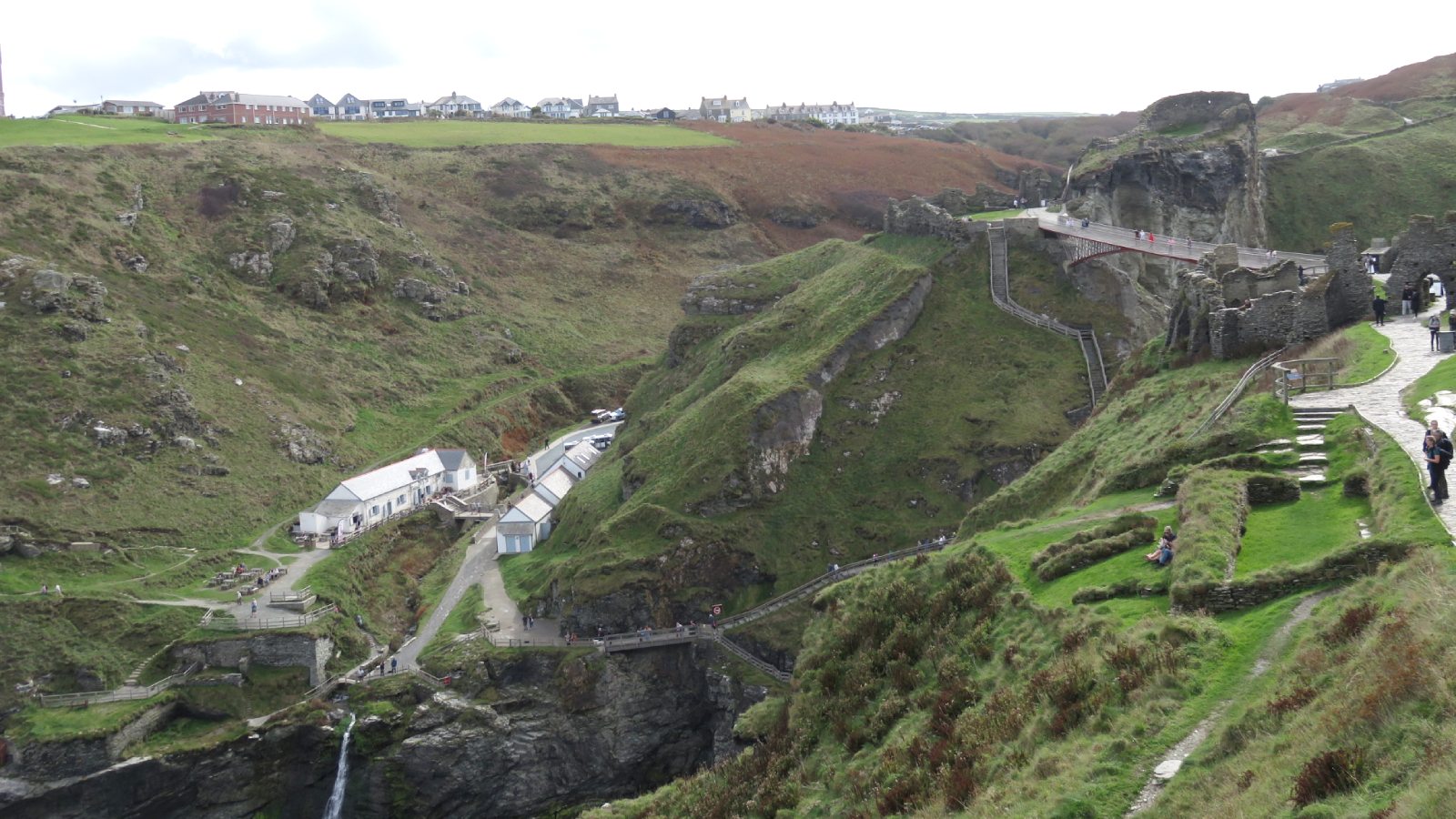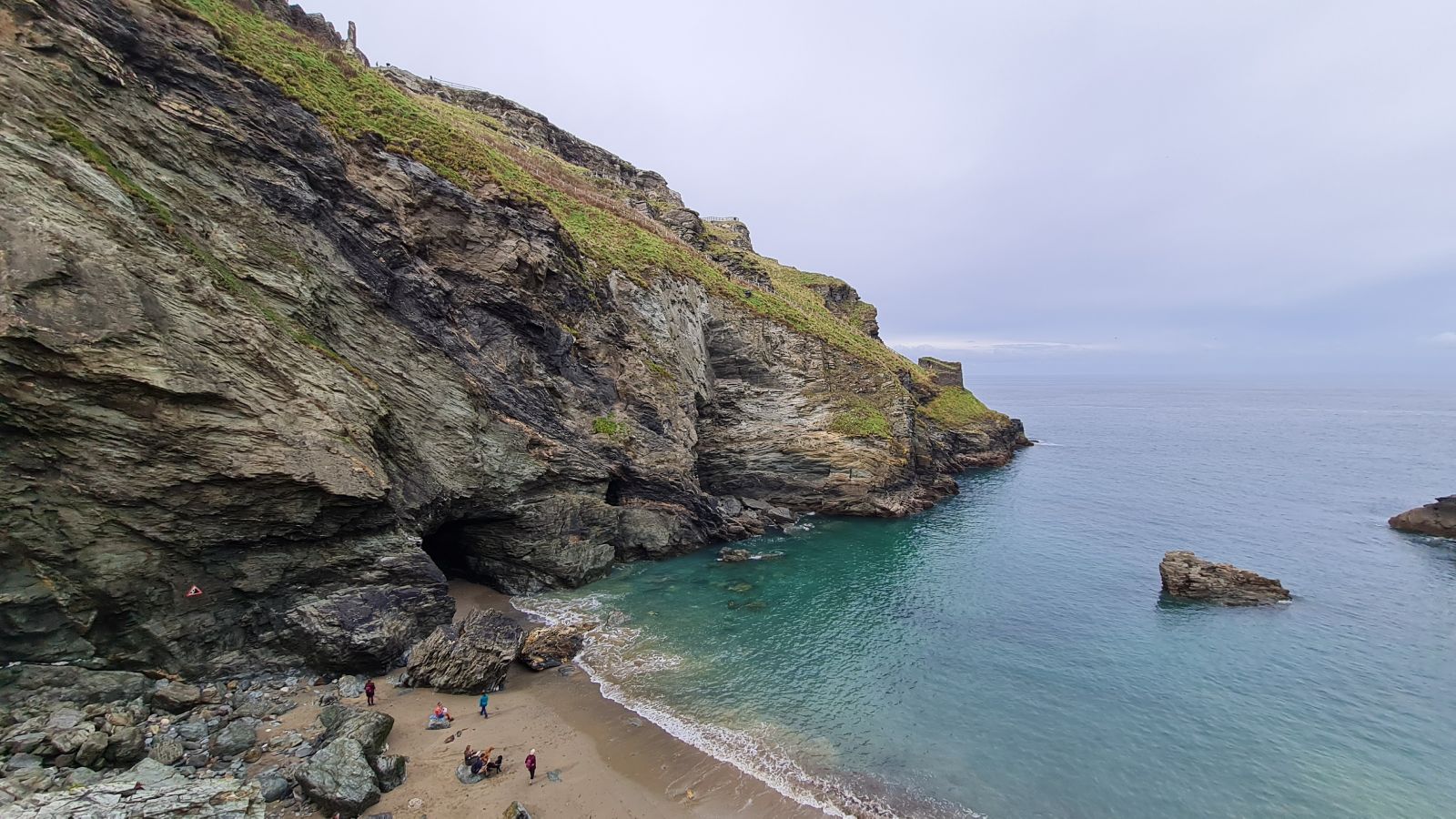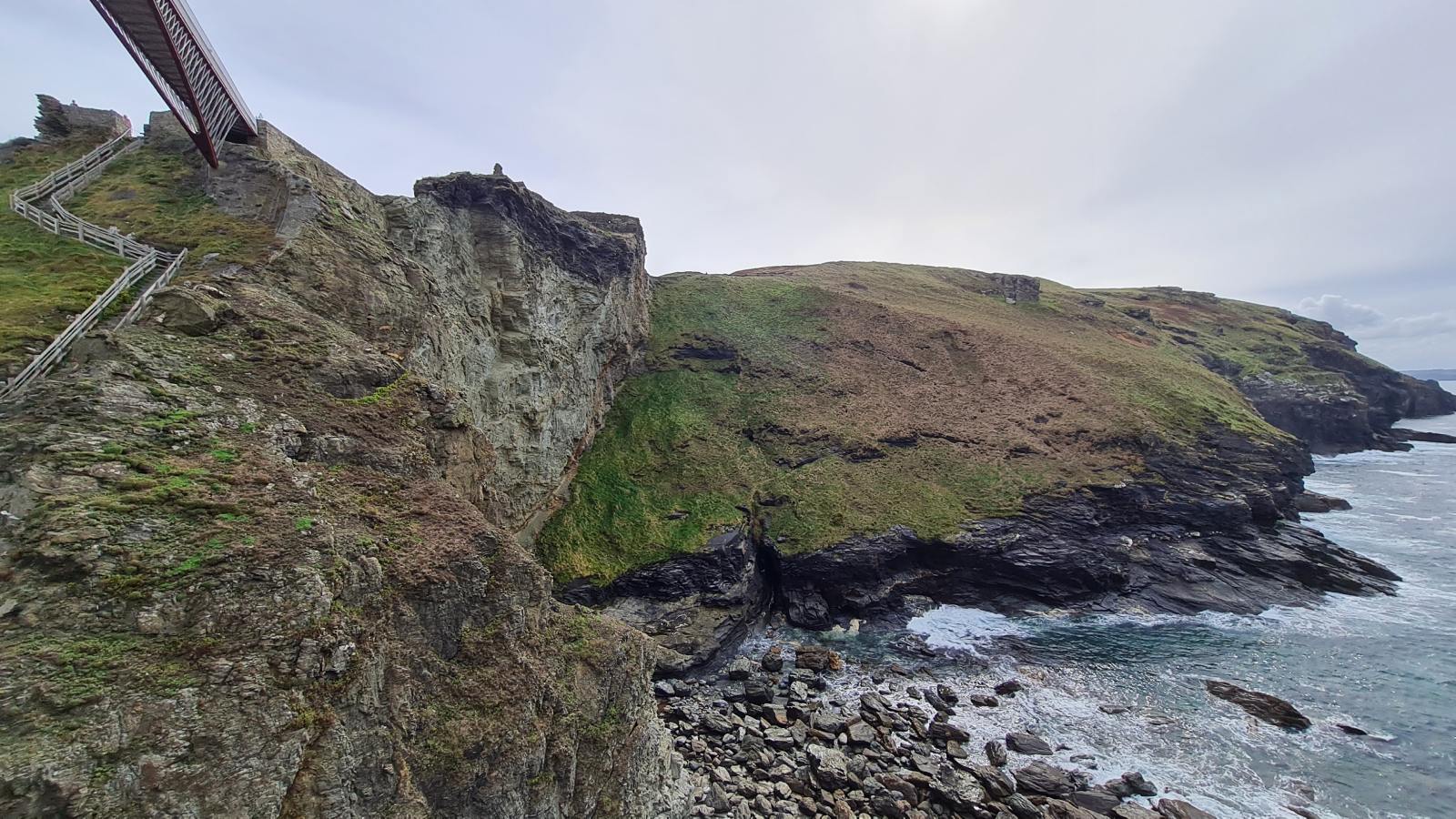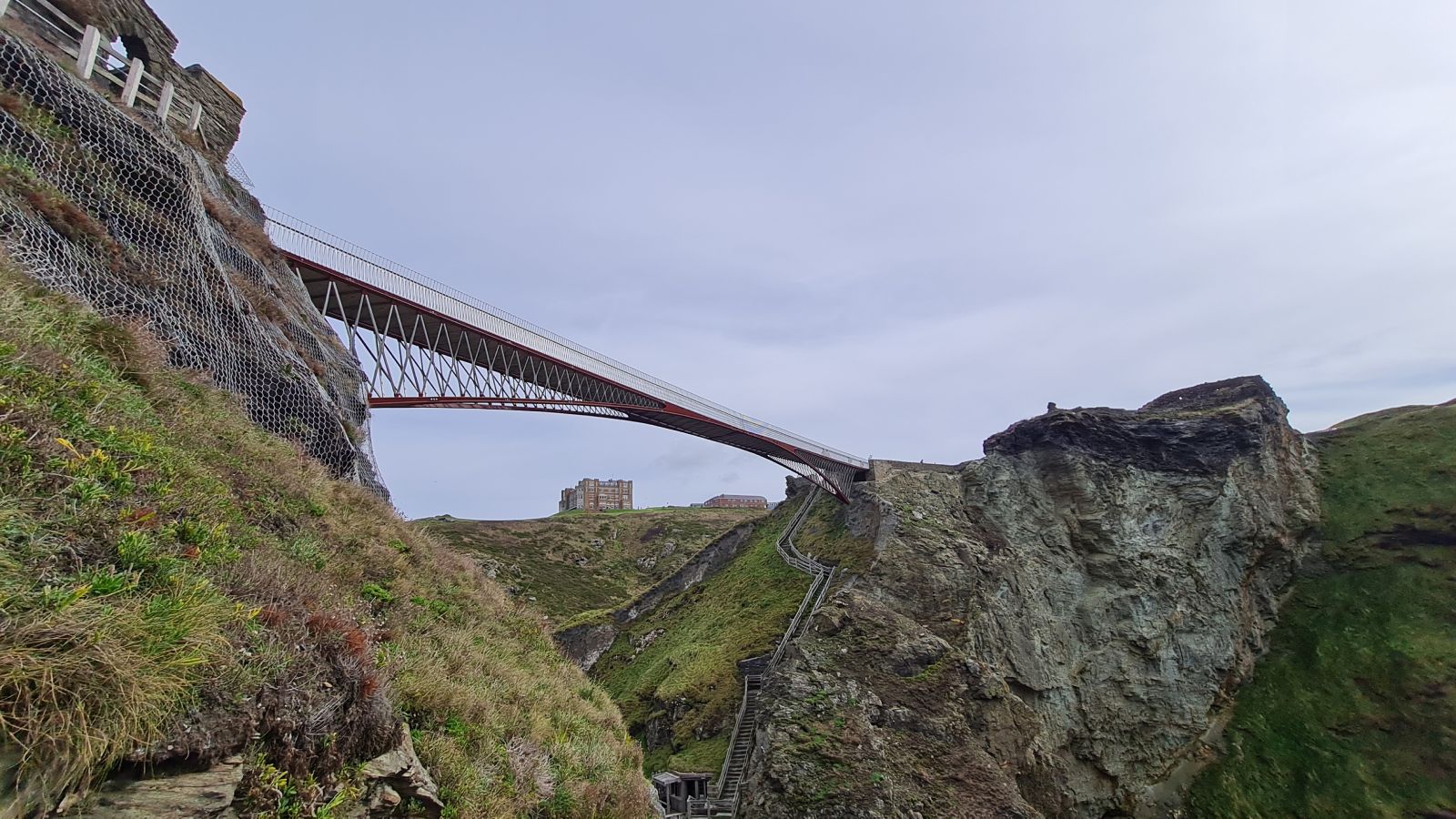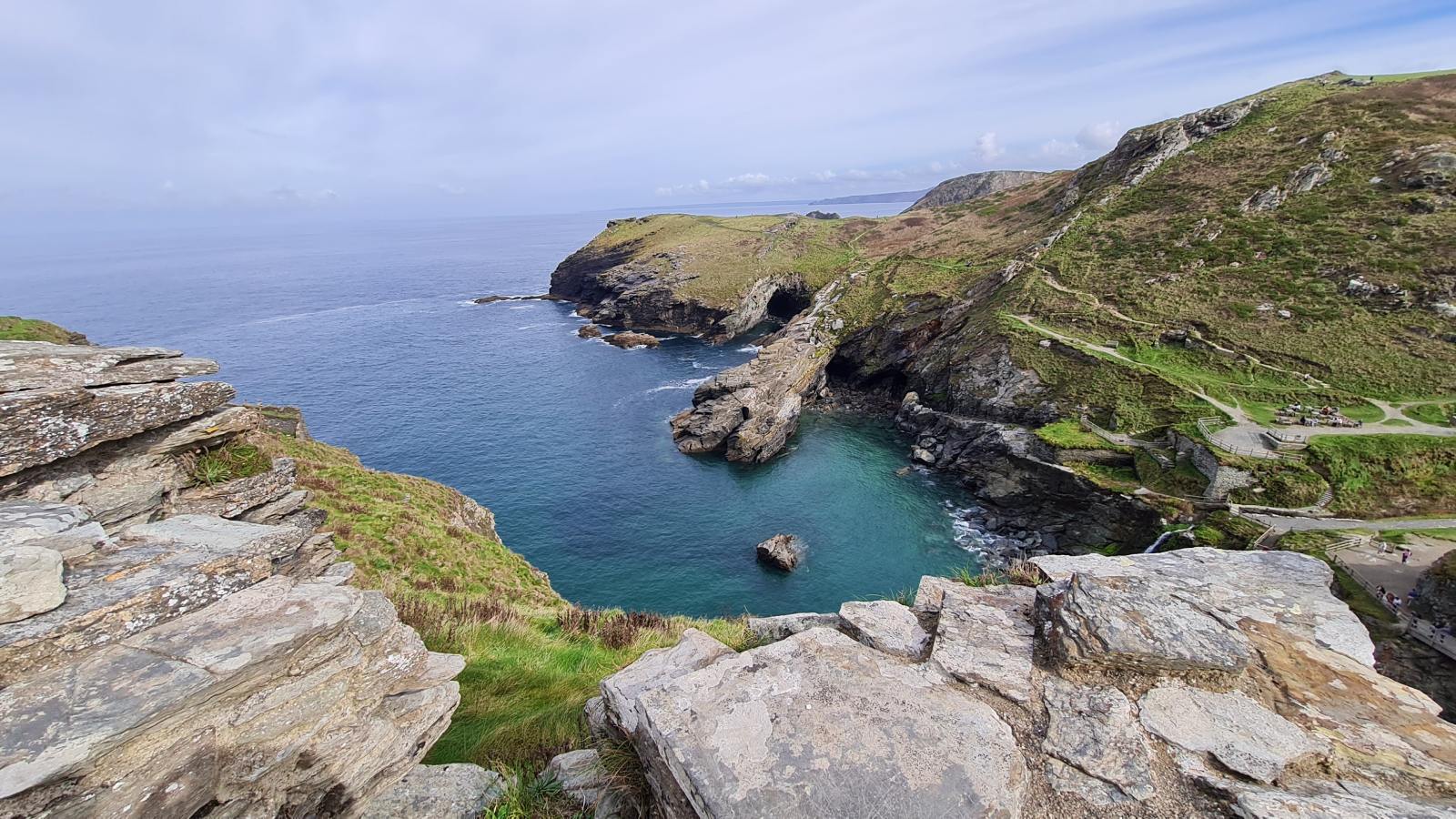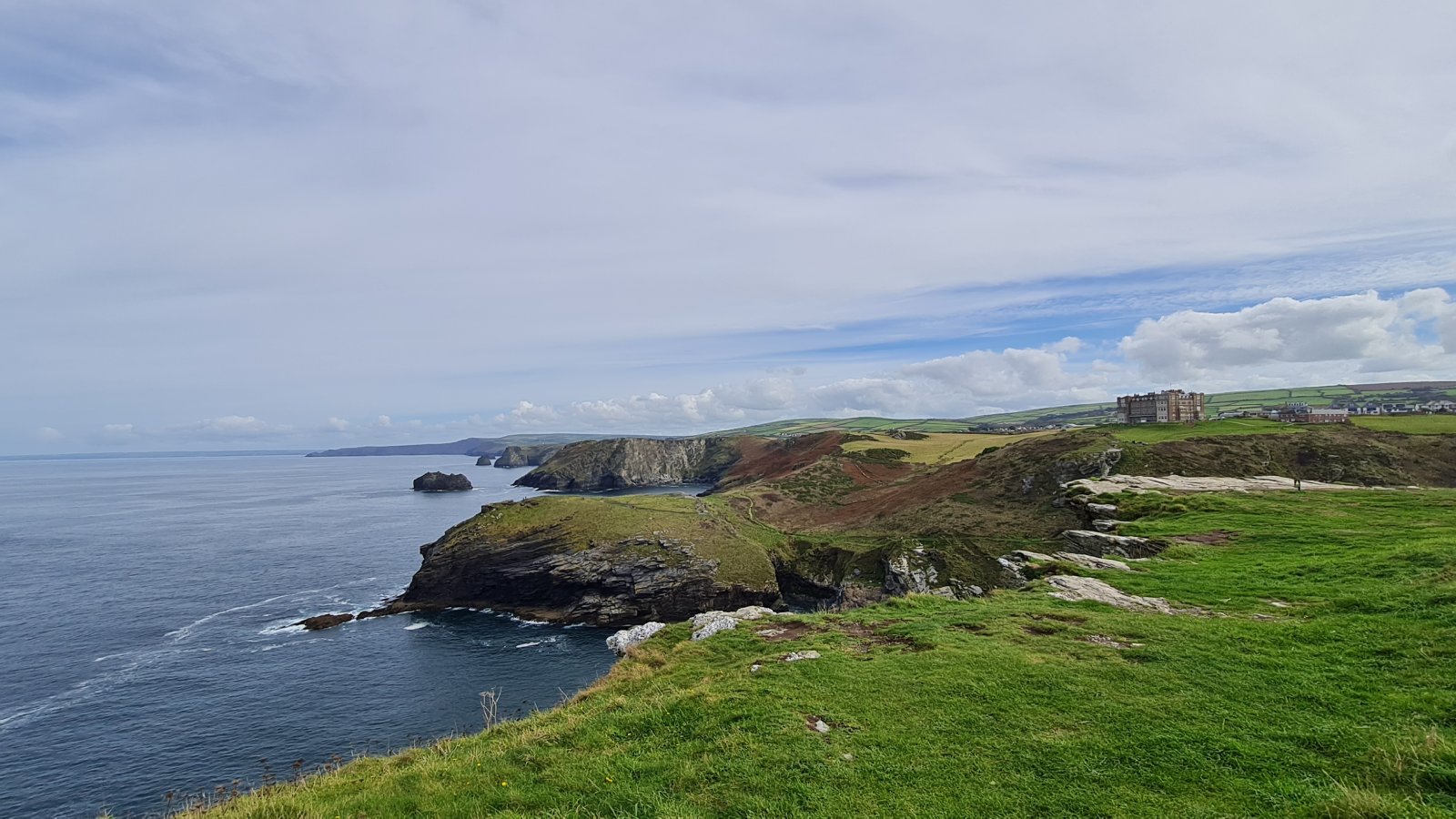

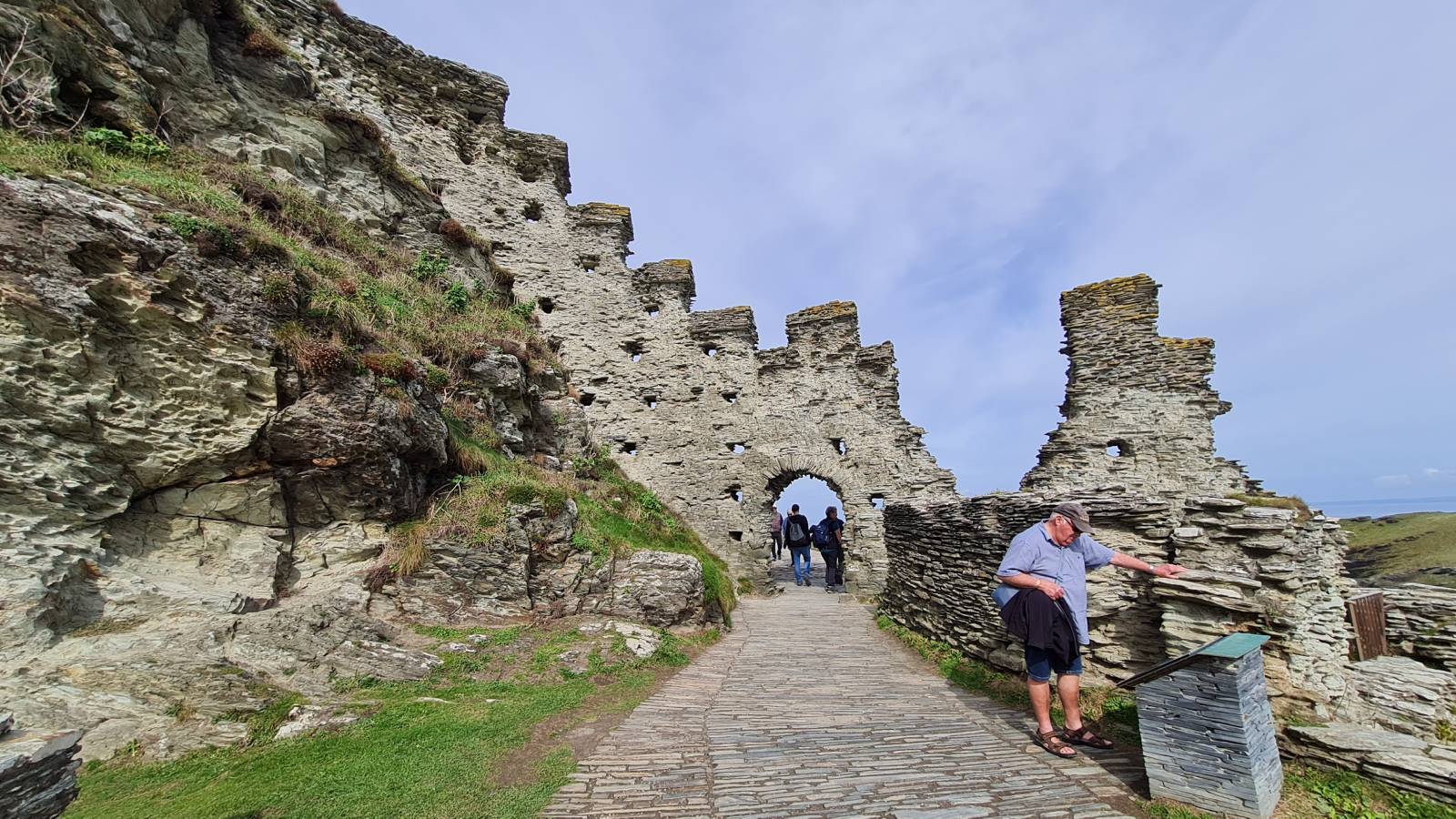
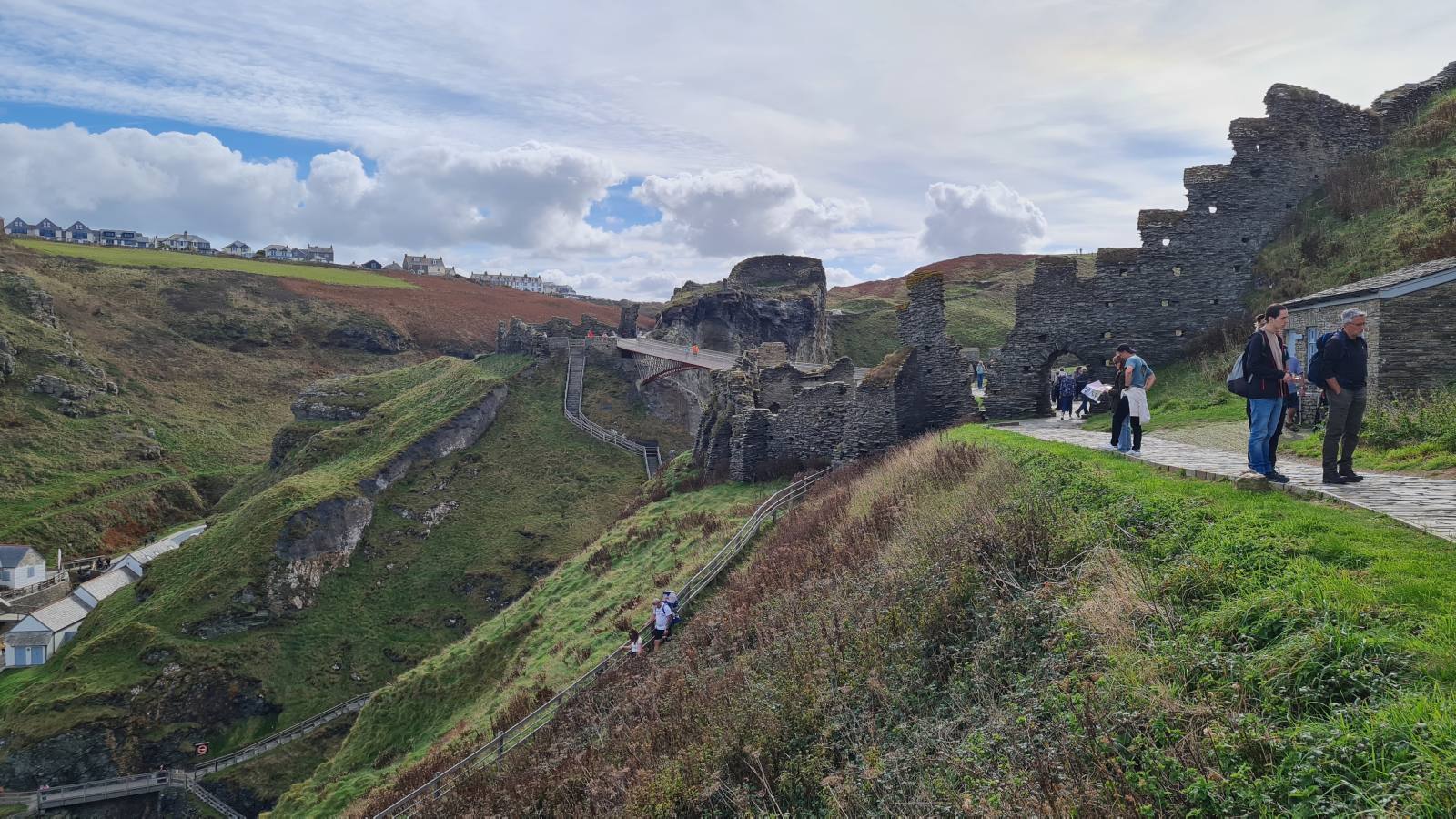
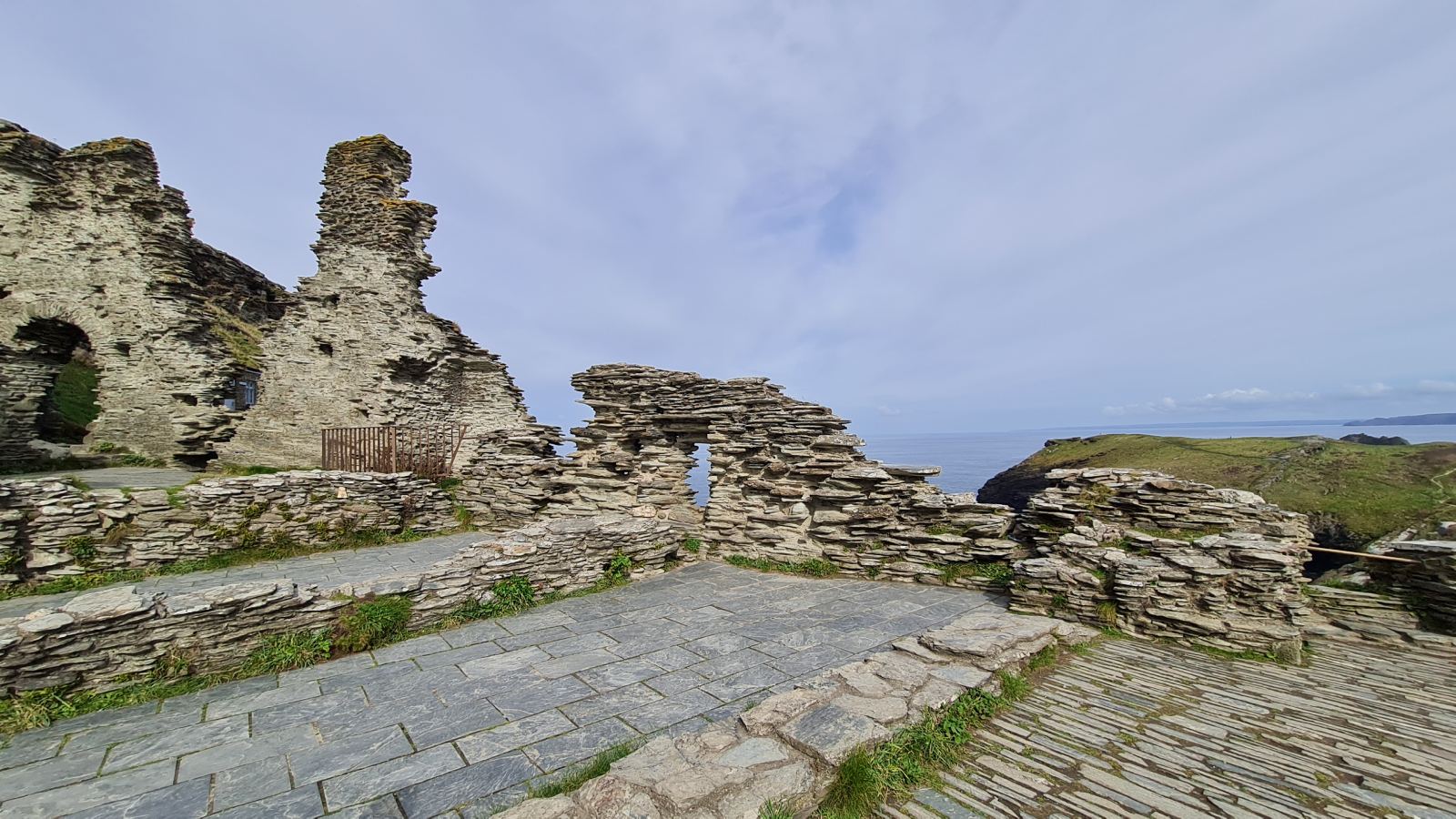
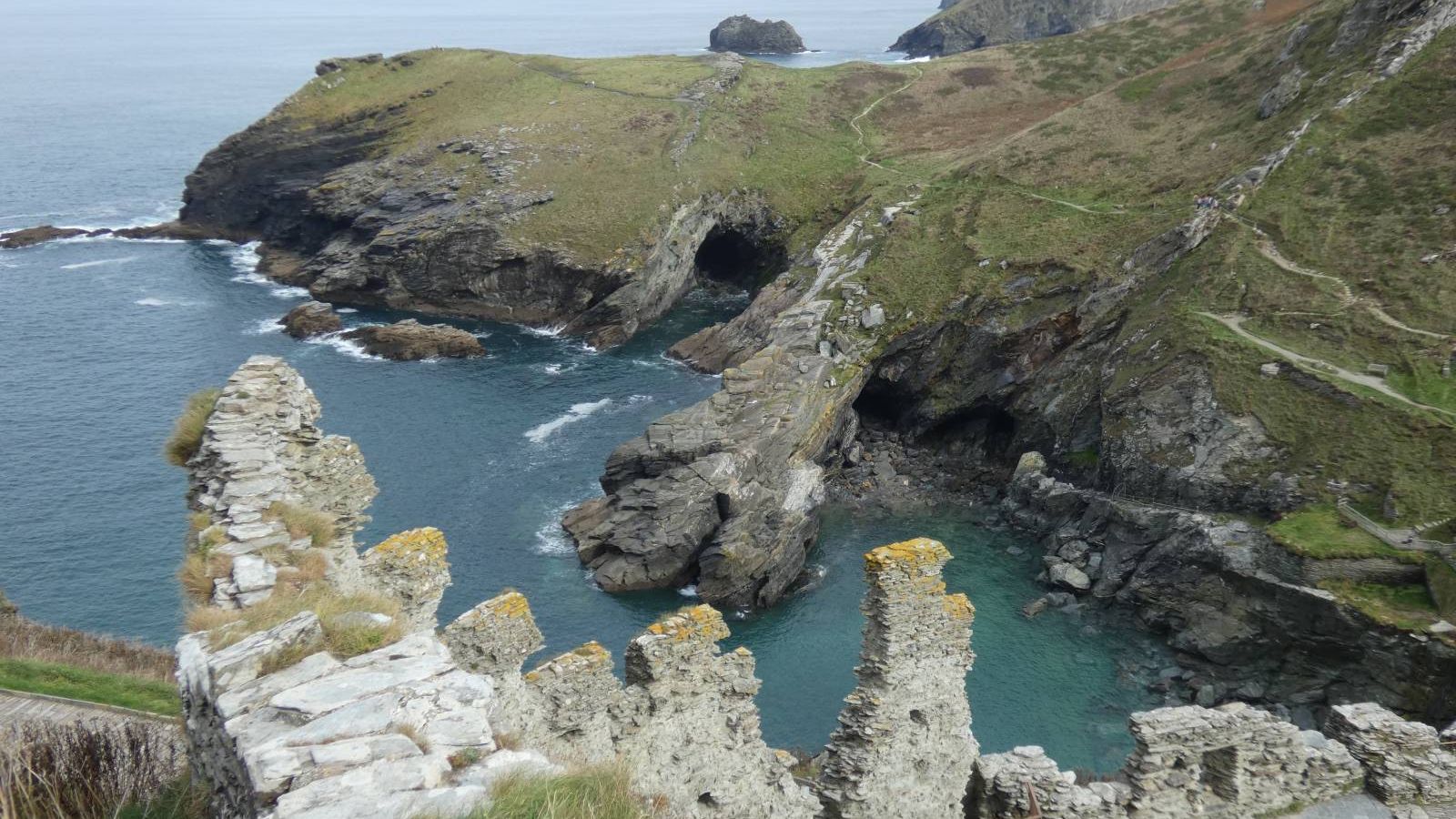

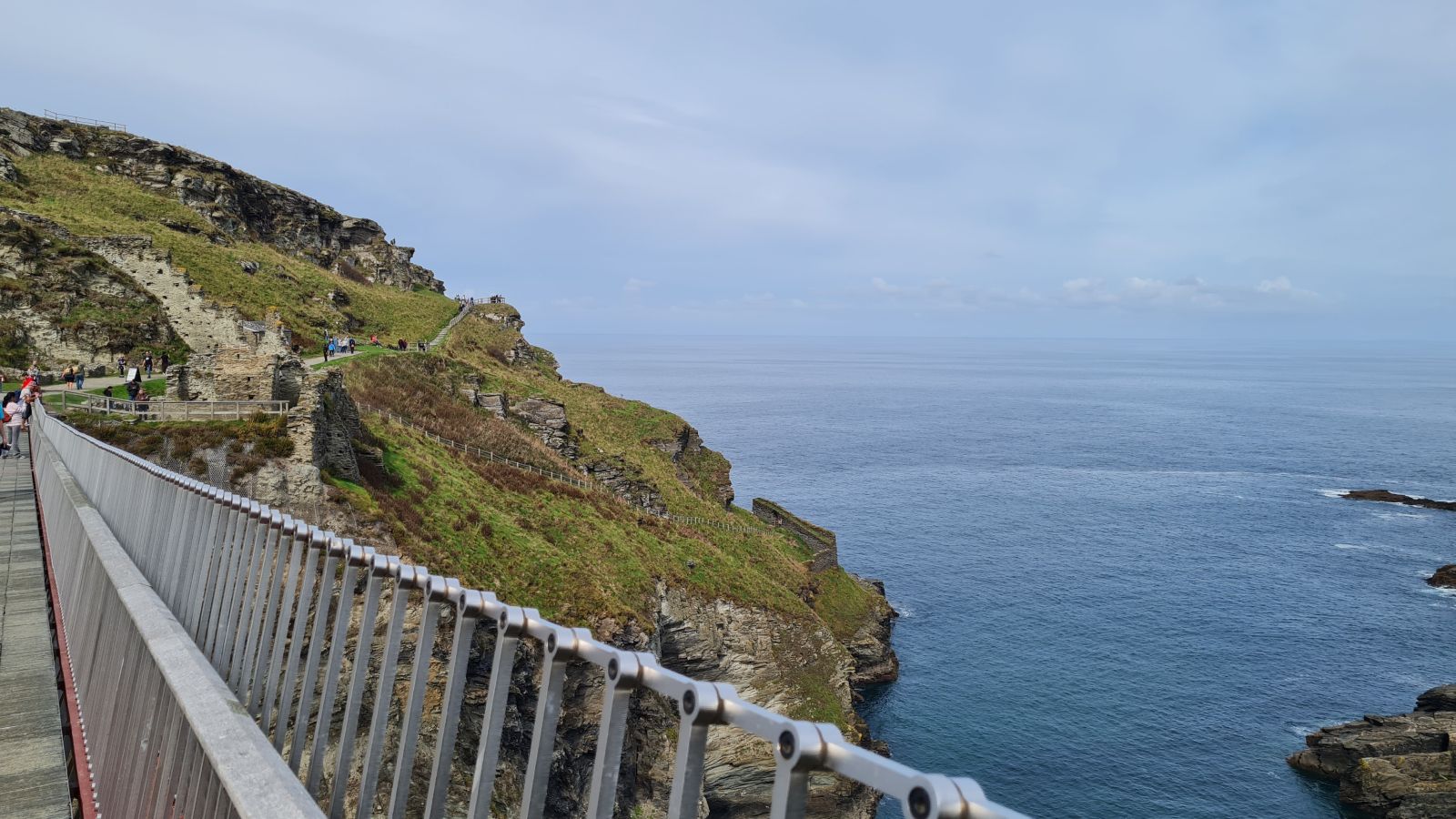

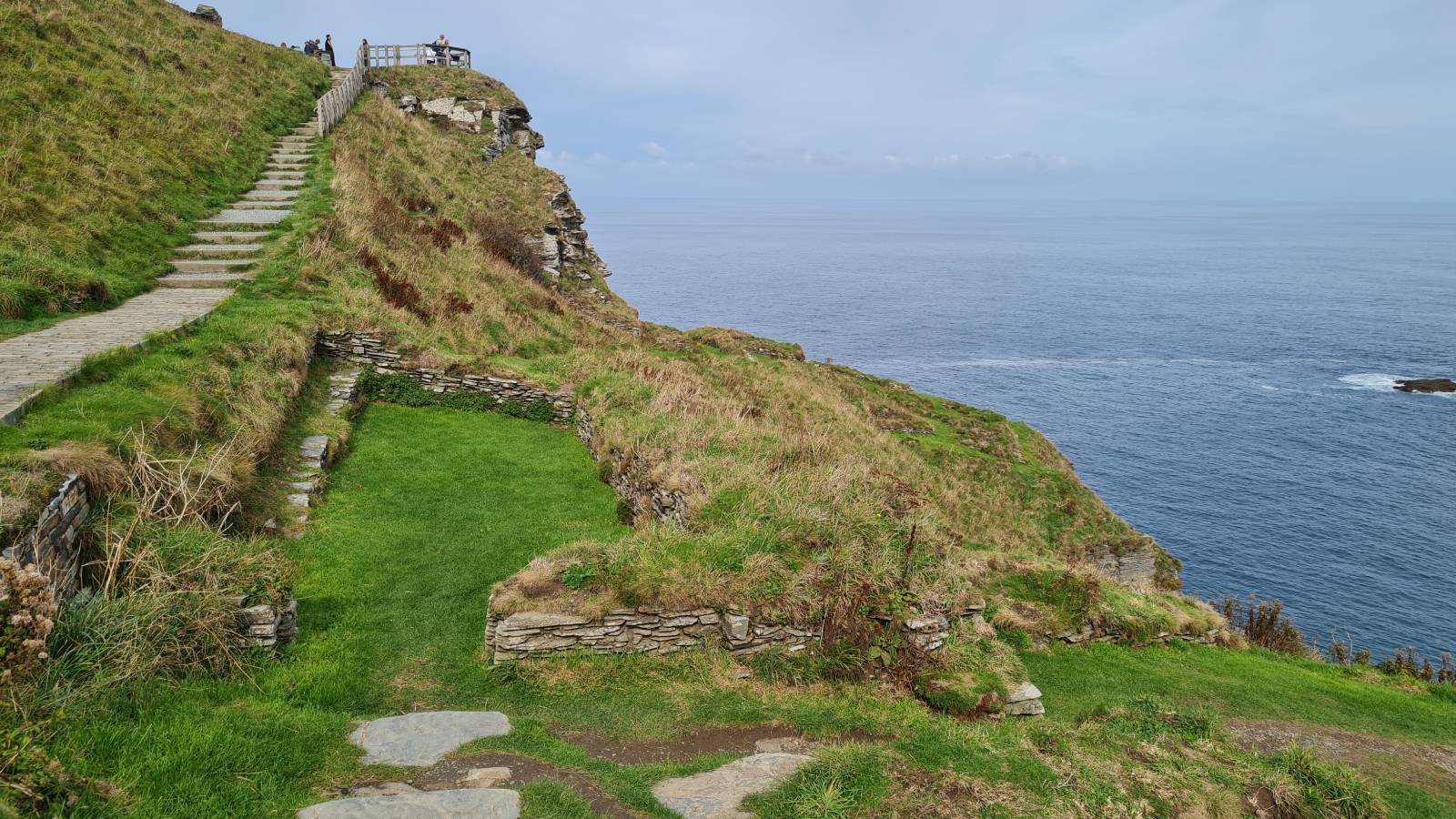


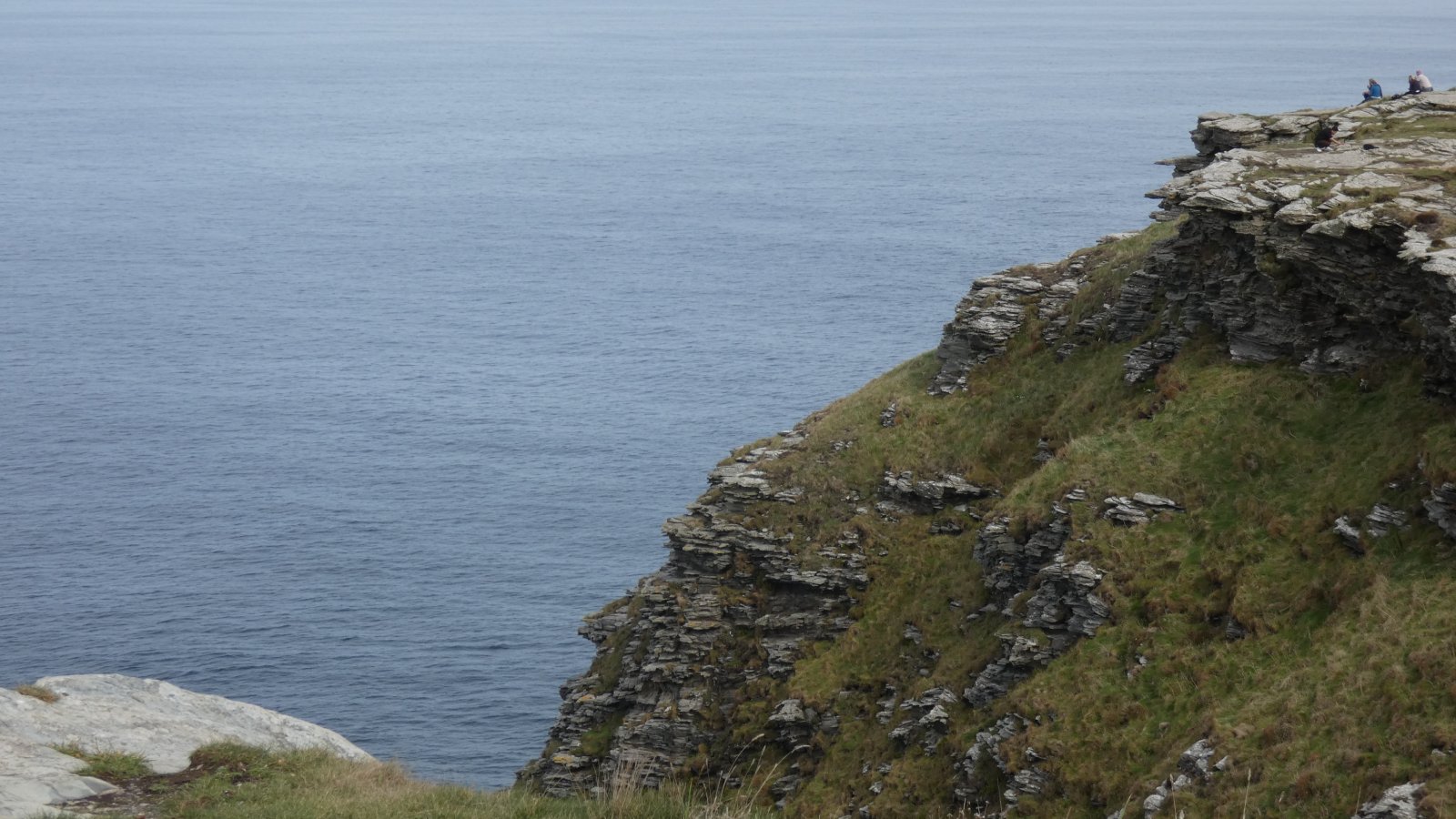
We had been looking forward to exploring Tintagel, the ruins of an ancient castle and village built on dramatic clifftops in Cornwall. The setting was absolutely stunning, with walkways and stairs weaving up and around the steep cliffs, offering spectacular views across the valley, the beach and the Atlantic ocean. The suspension footbridge is just as incredible as it looks in the photos! Watch this aerial video to get an idea of just how extraordinary the landscape is.
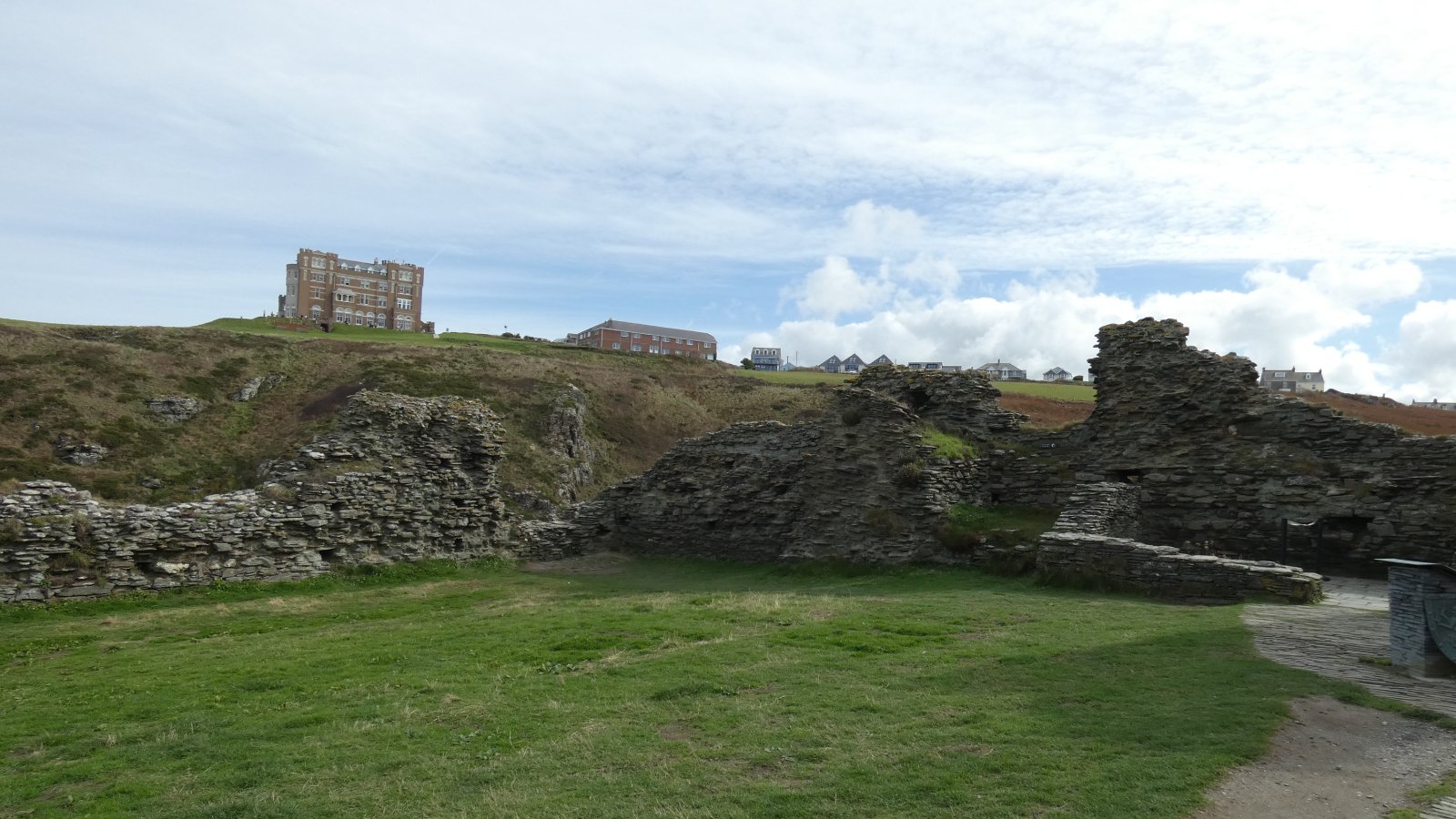
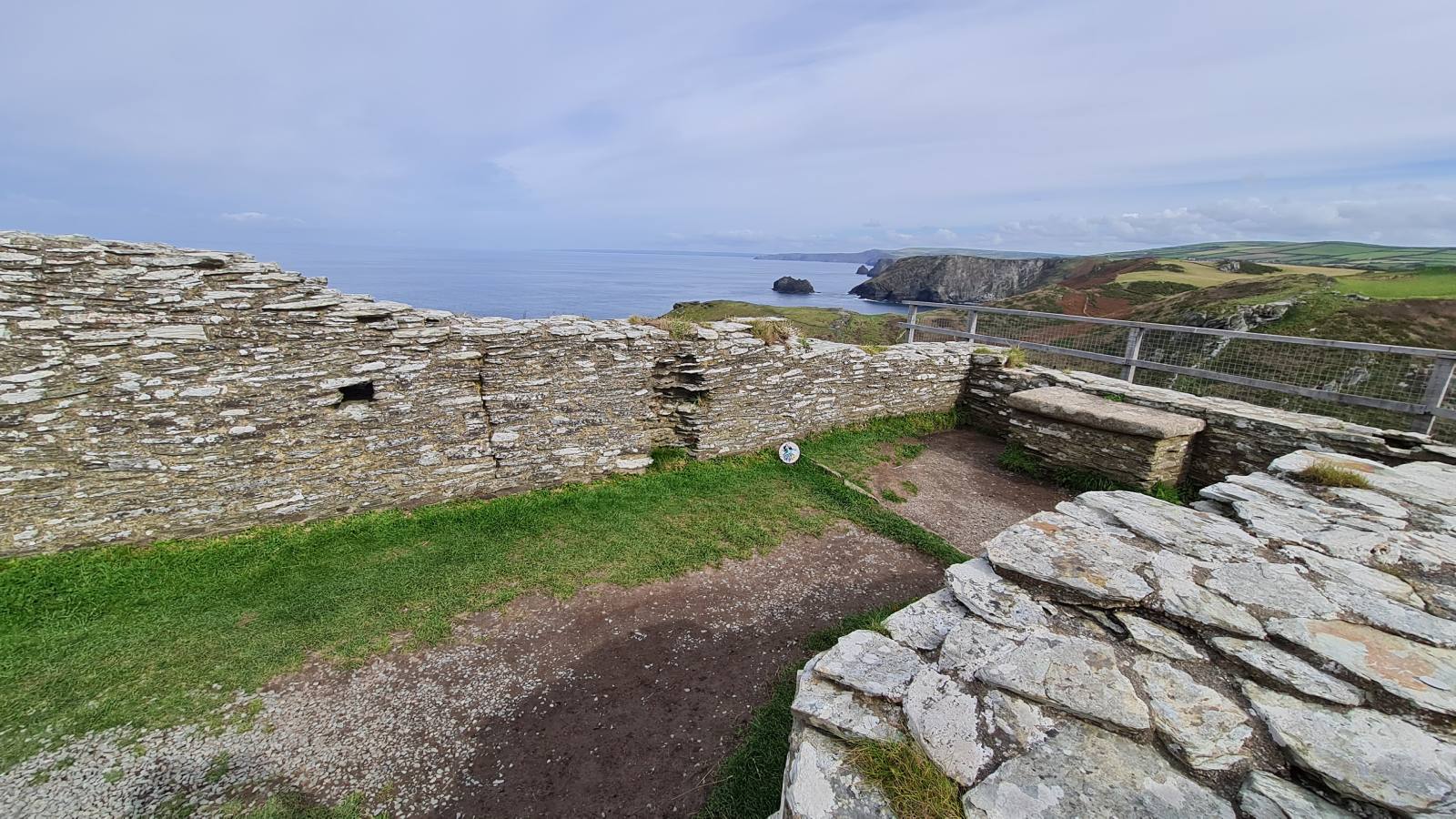
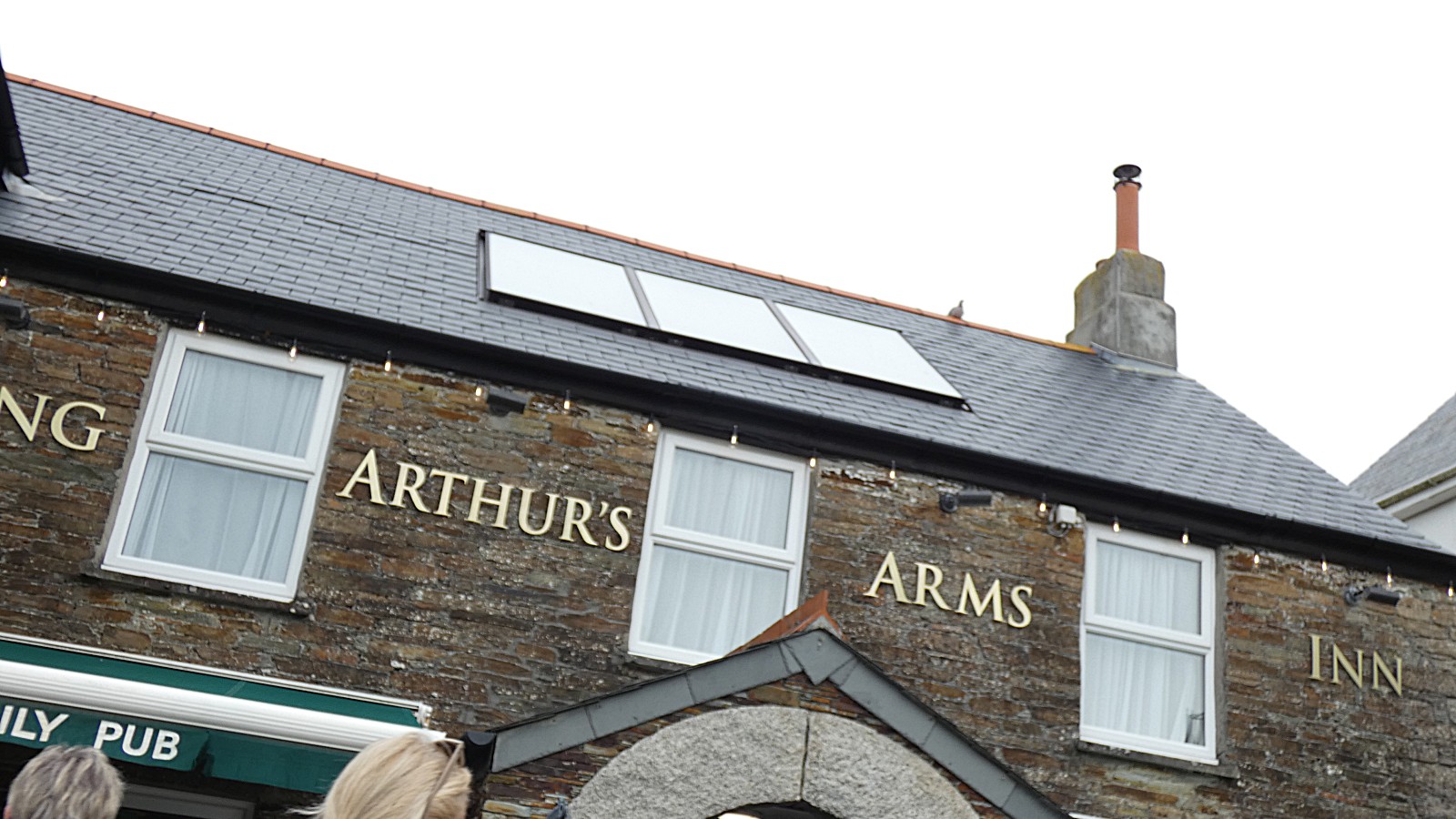
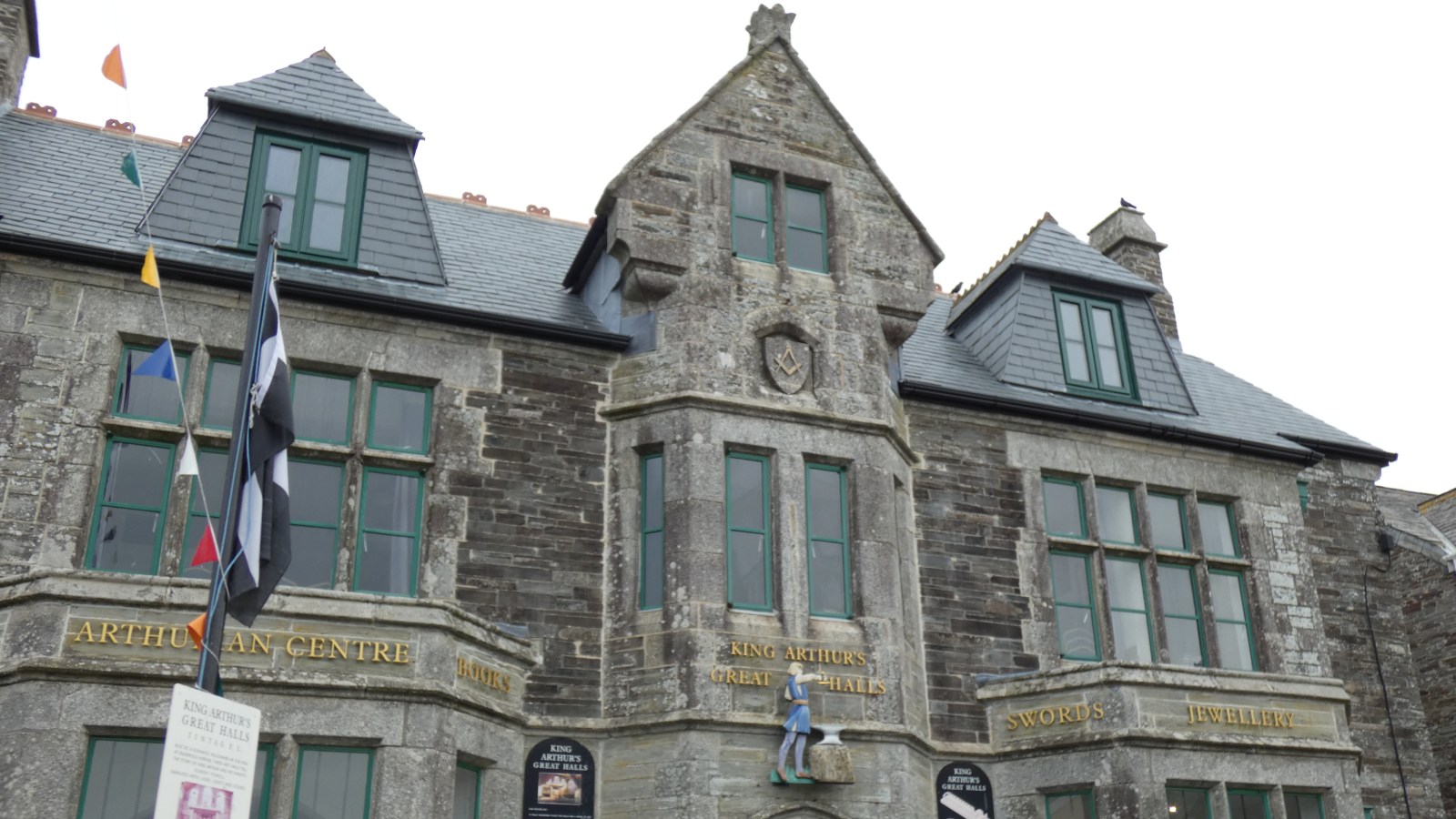
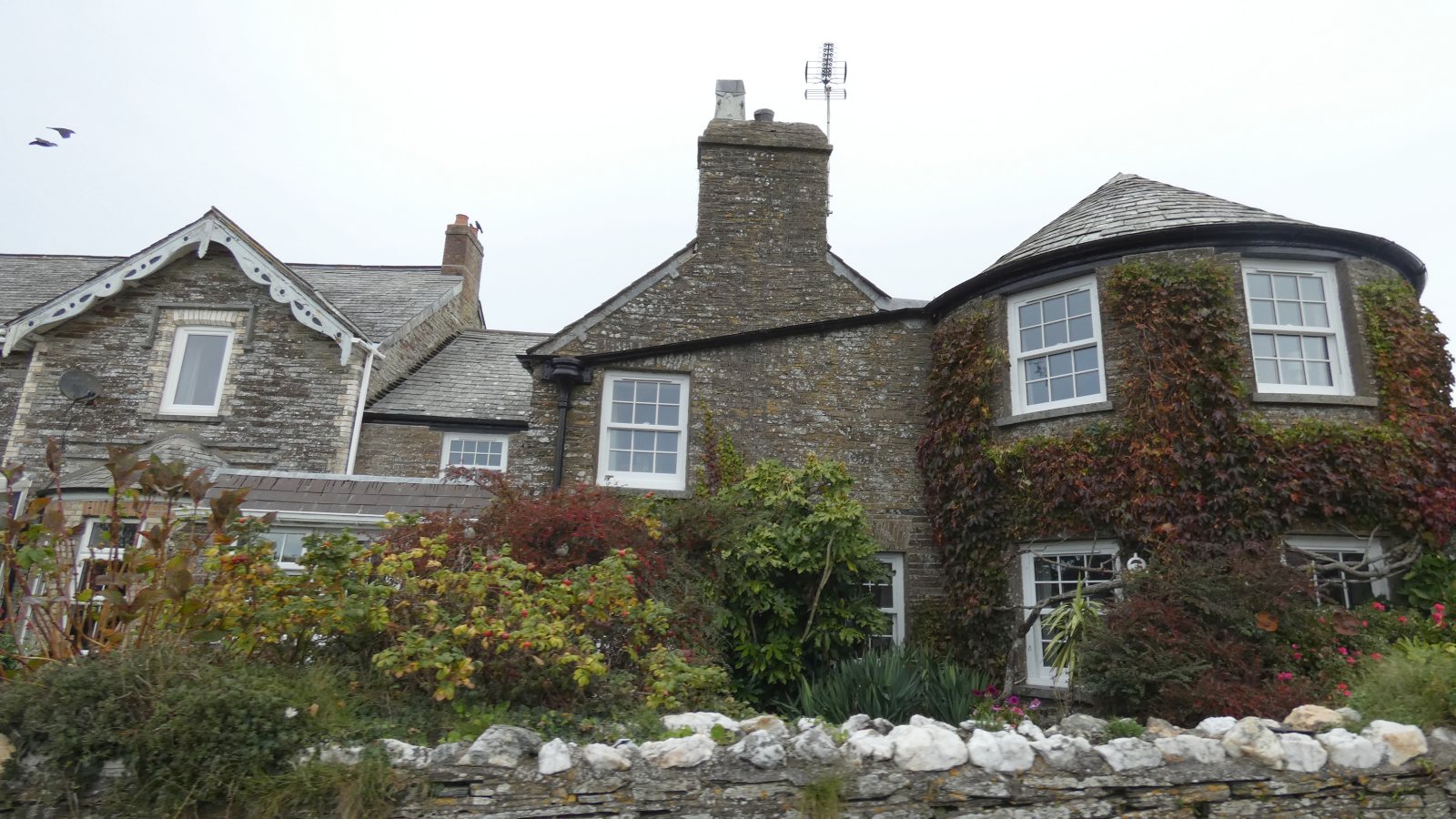
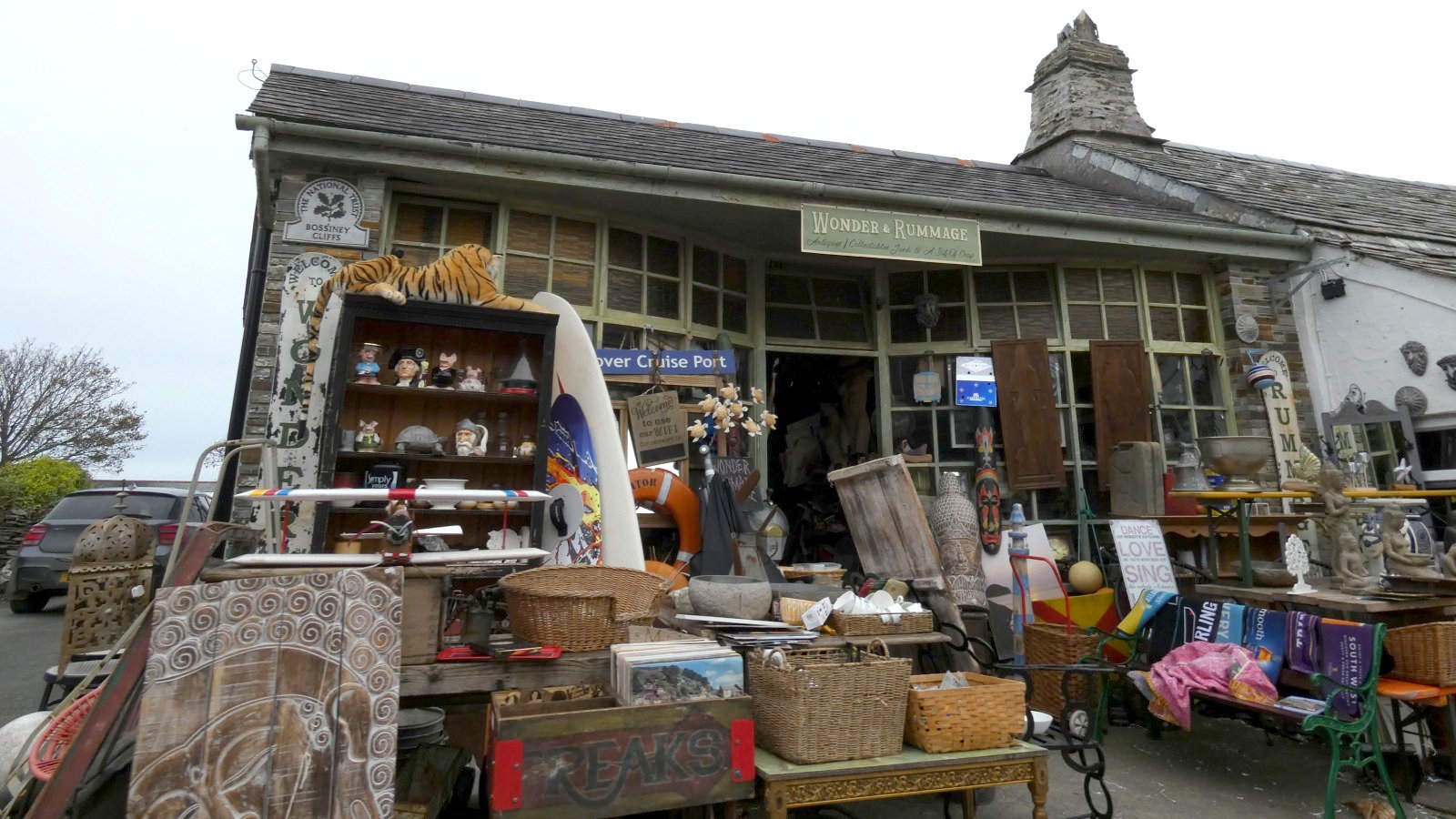
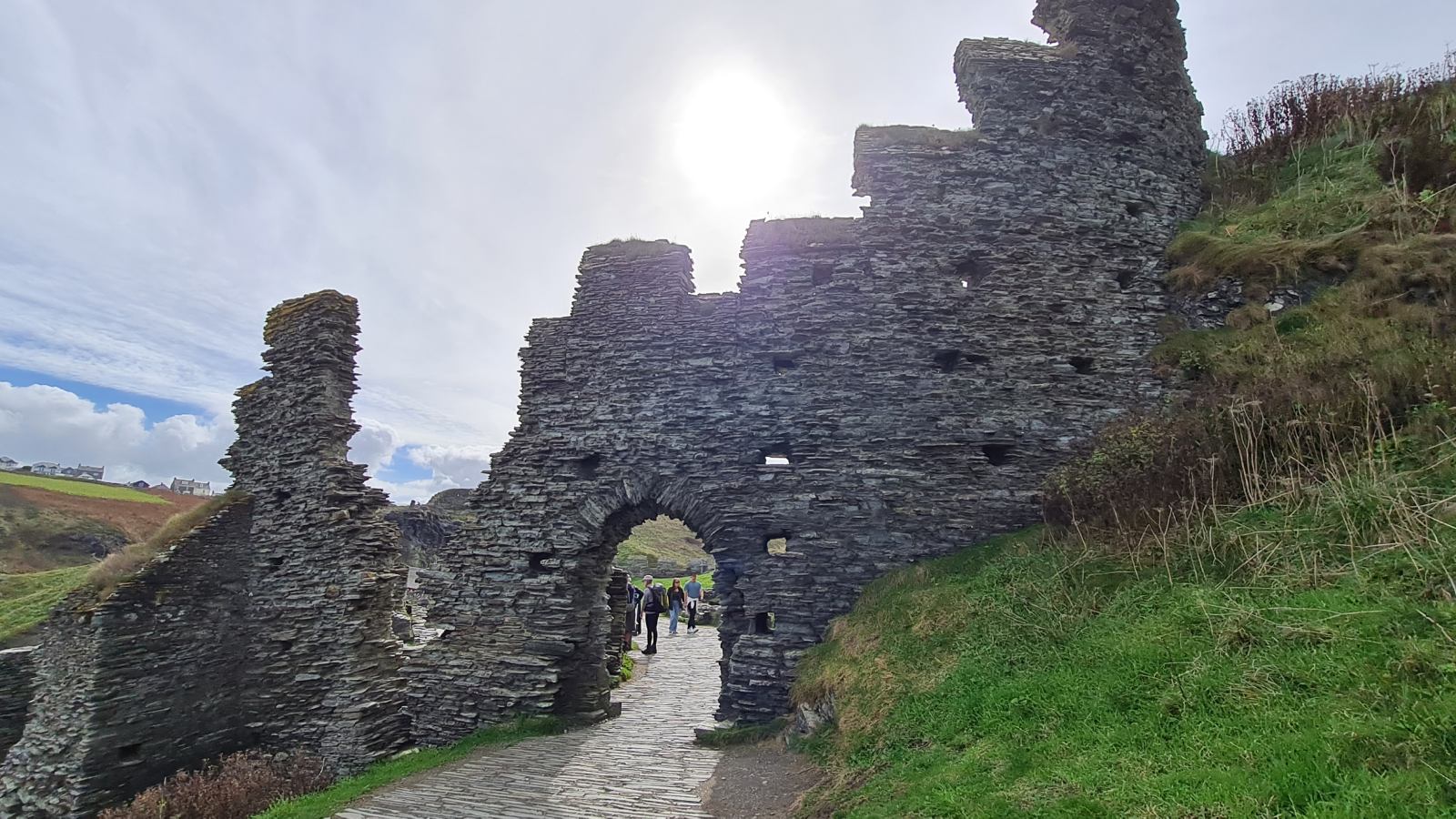
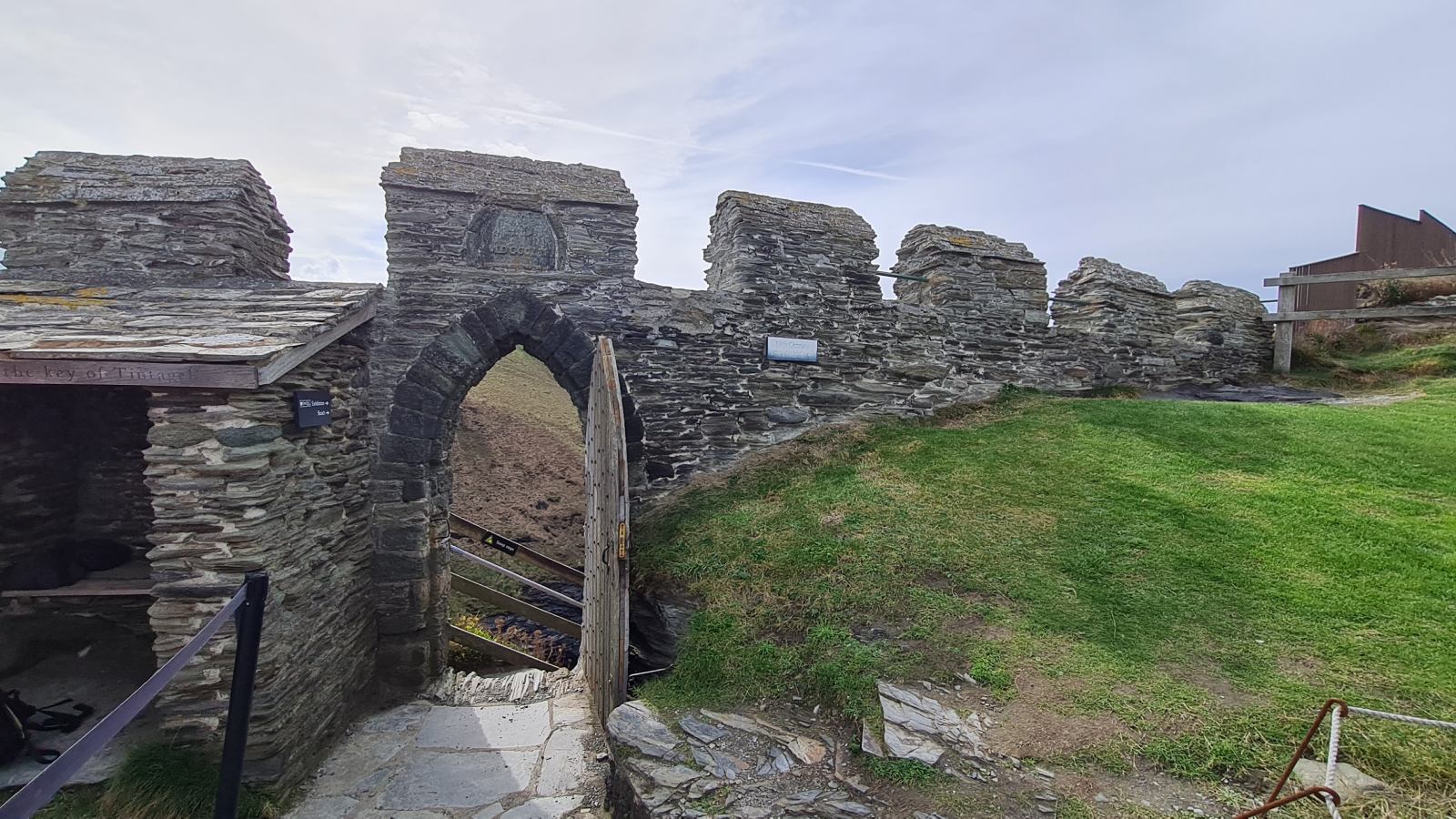
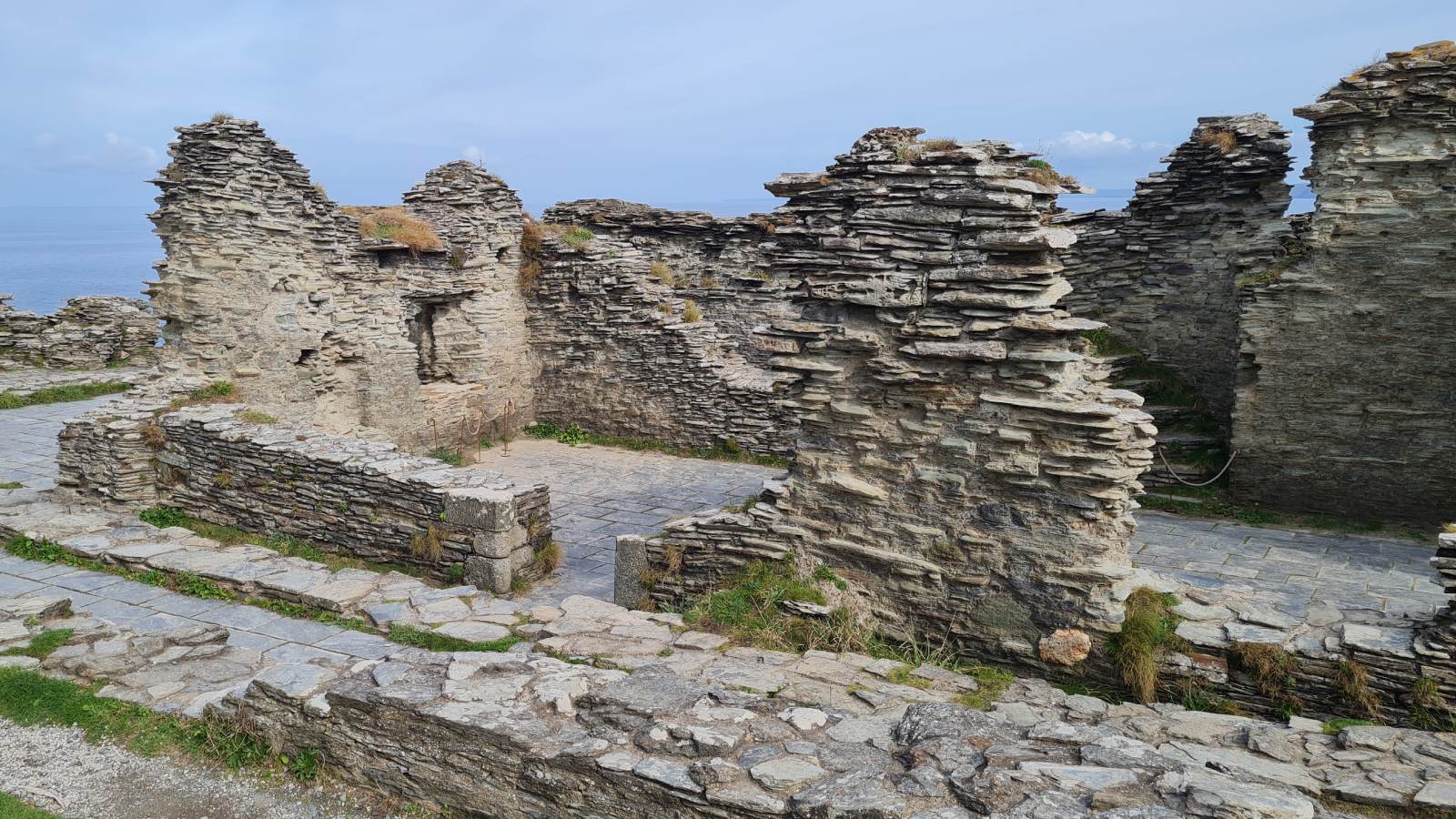
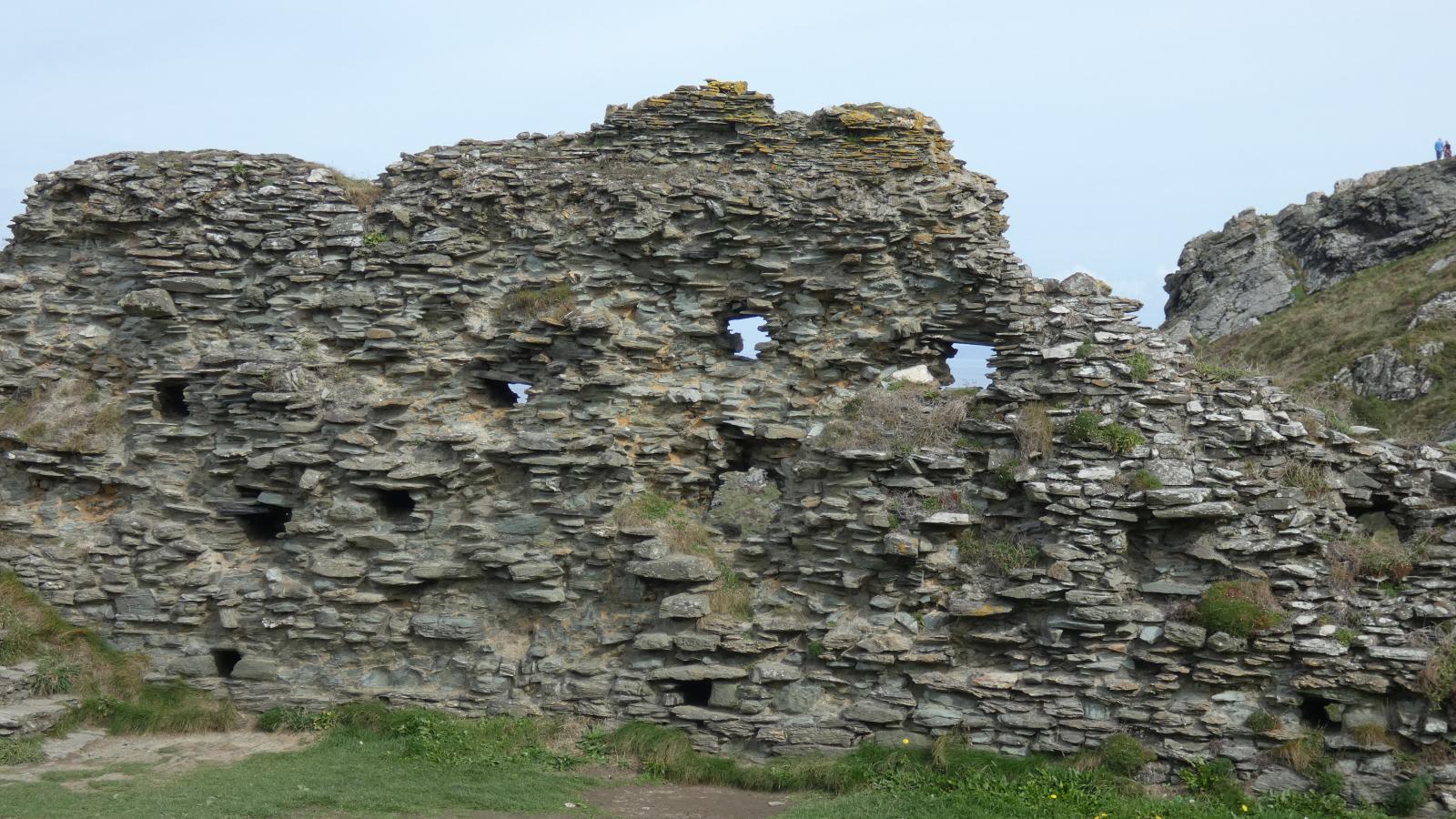
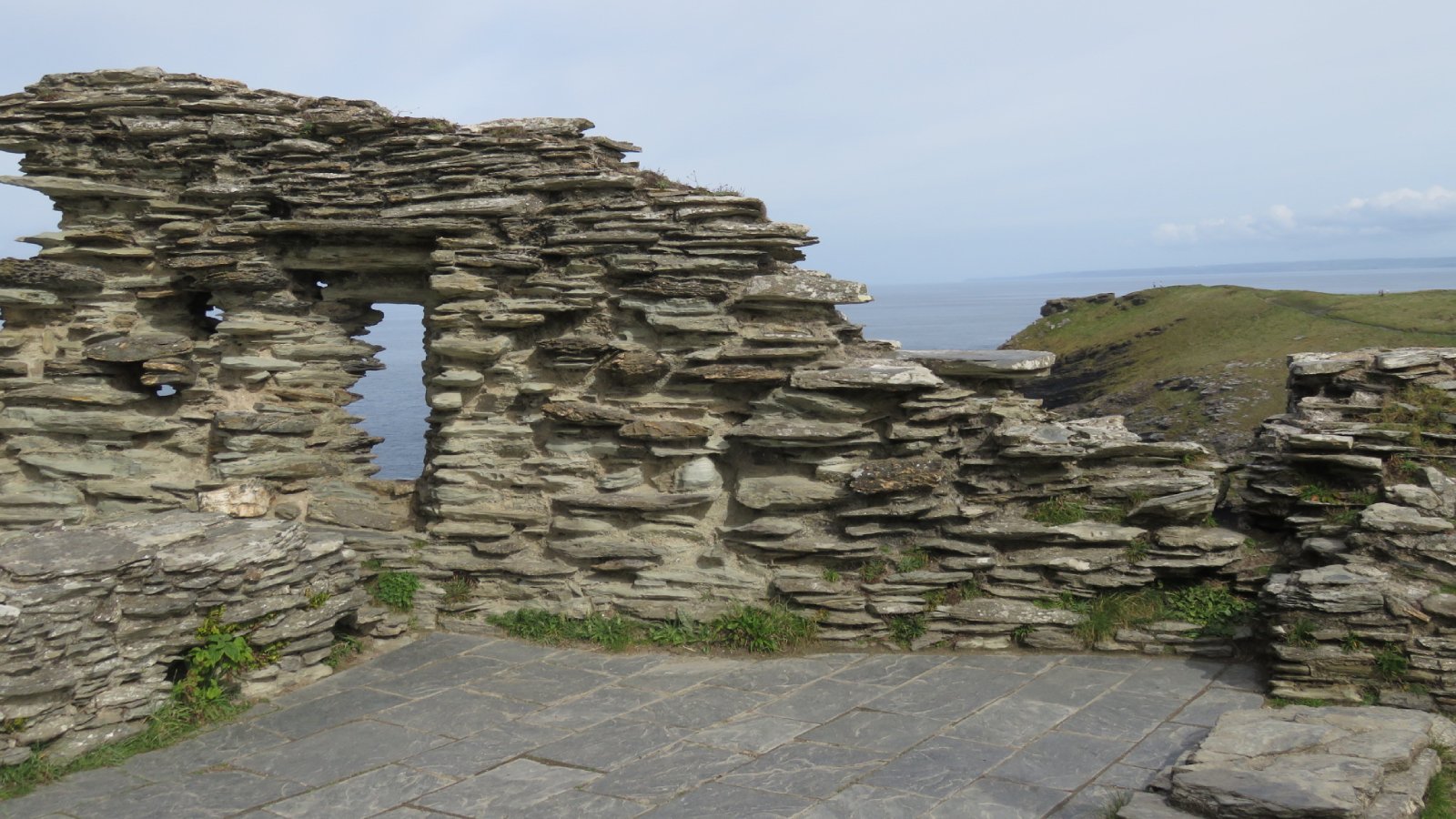
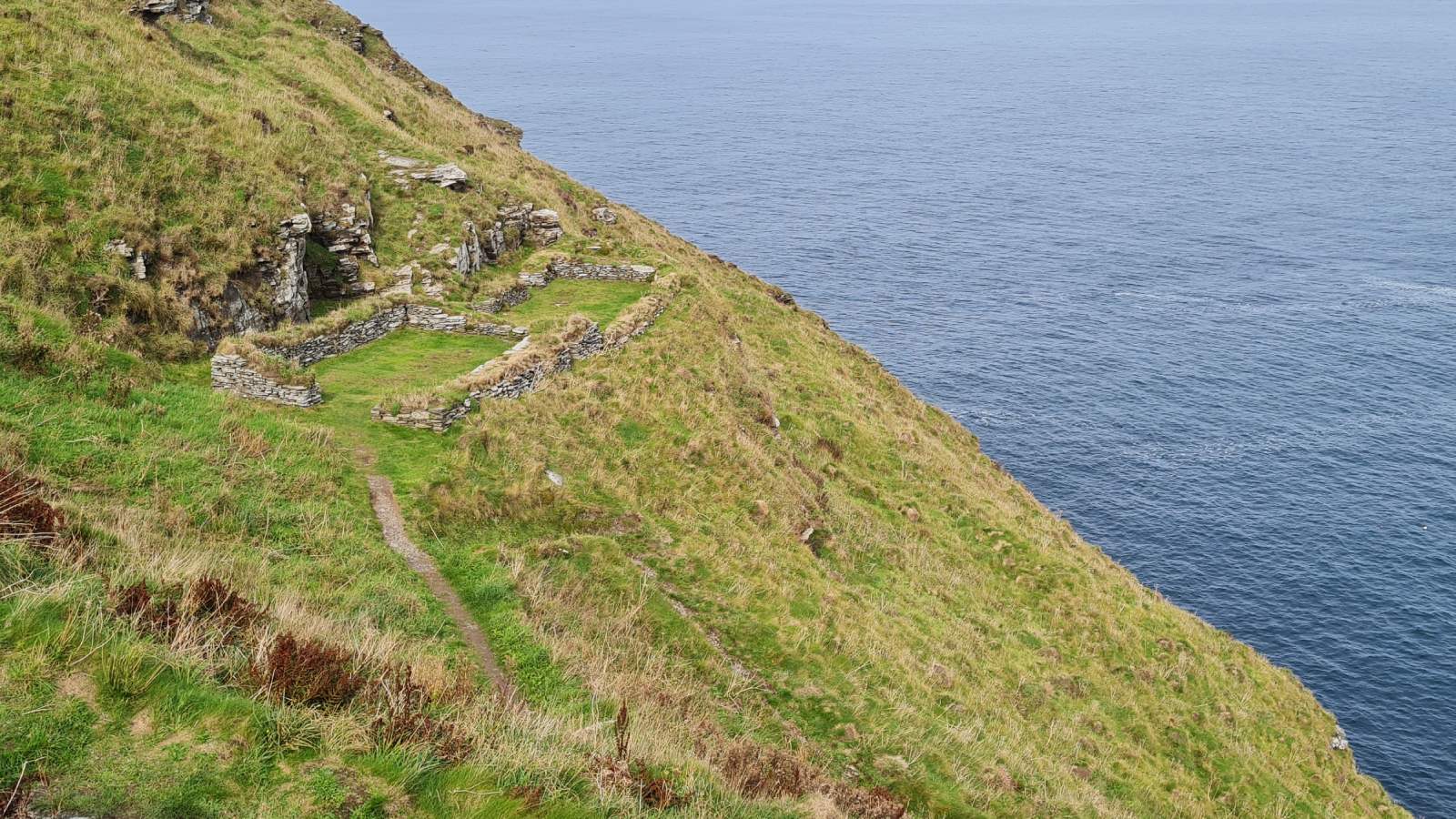
There are ruins everywhere, some dating back to a medieval settlement that stood here between the 5th and 7th centuries, others from a 13th century castle and walled garden. Construction must have been a mammoth and dangerous task – imagine carting materials down into the valley then up the steep hill of the peninsula, then precariously building on the edge of the rugged cliffs, probably often in wild and windy weather. See more images below, including some photos of the current day village of Tintagel on the mainland.
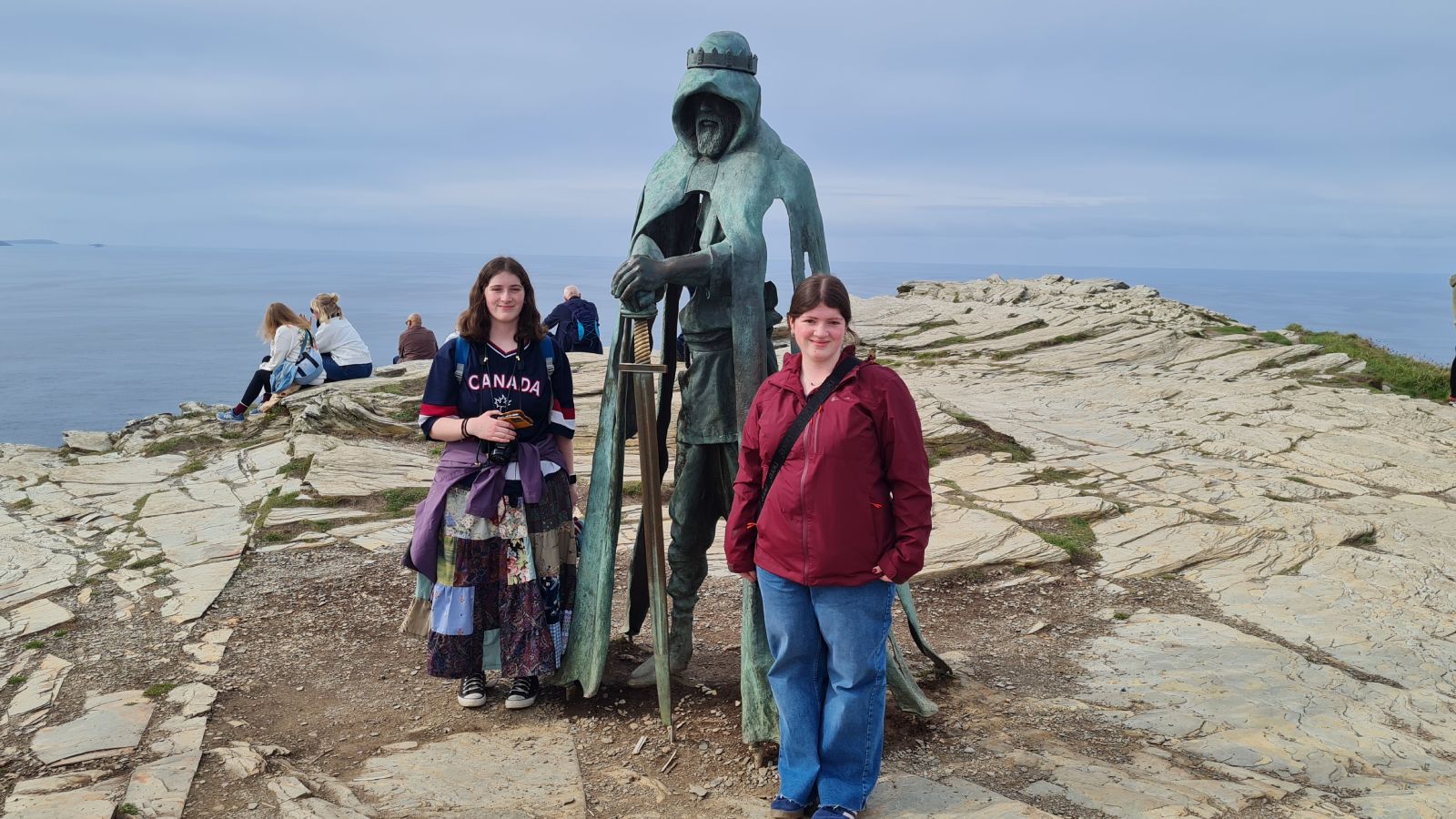
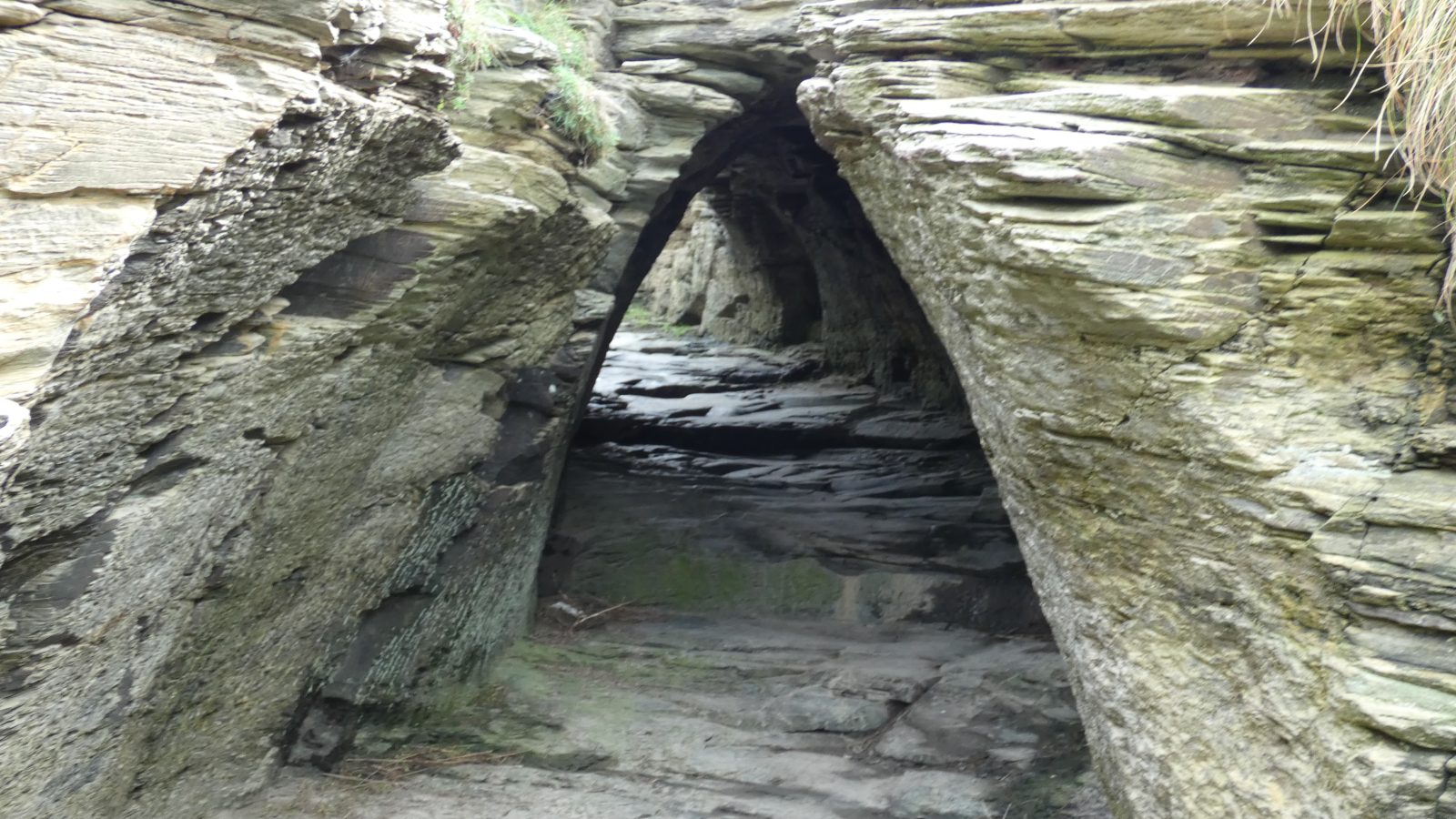
According to mythology and literature, Tintagel is where King Arthur was born. Although there is debate over whether he really existed, there is a sculpture which stands on one of the highest points of the peninsula which was inspired by his legend. Called the Gallos sculpture – meaning ‘power’ in Cornish – it is made from bronze and stands eight foot tall. There is also a cave on the beach below named after Merlin the Wizard, King Arthur's adviser. Tintagel definitely has a timeless feel about it and some remarkable people must have lived here over the years, real or legendary.
It’s believed that the Romans occupied Tintagel in the 3rd and 4th centuries, then the site became a major trading hub from 450-650, with the population swelling to 2,000. Glassware and pottery were imported from the Mediterranean and probably exchanged for tin, which was plentiful in Cornwall.
Richard, the Earl of Cornwall and brother of King Henry III, bought the peninsula in the 1230s and built Tintagel Castle on it. Although most of what is left of the castle and the peninsula village is ruins, the signage across the site brings it to life through stories and illustrations. With a little bit of imagination, it is easy to picture a lively community of people going about their daily activities. A visit here really is like a journey back in time.
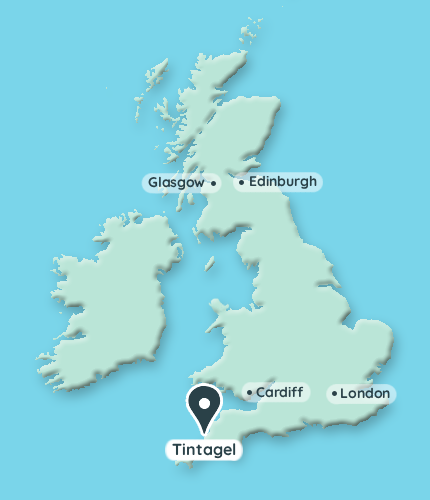
View Tintagel on Google maps