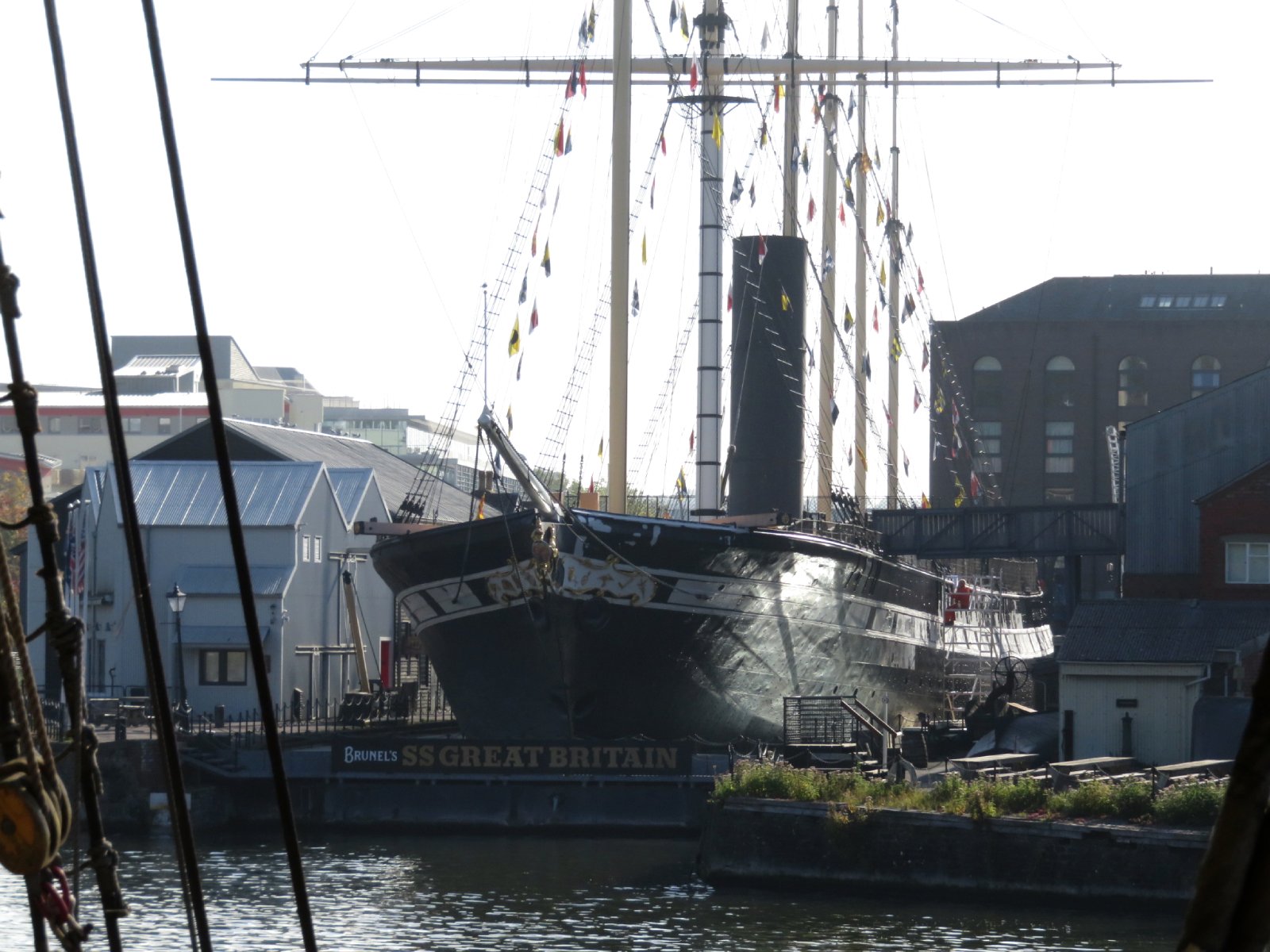
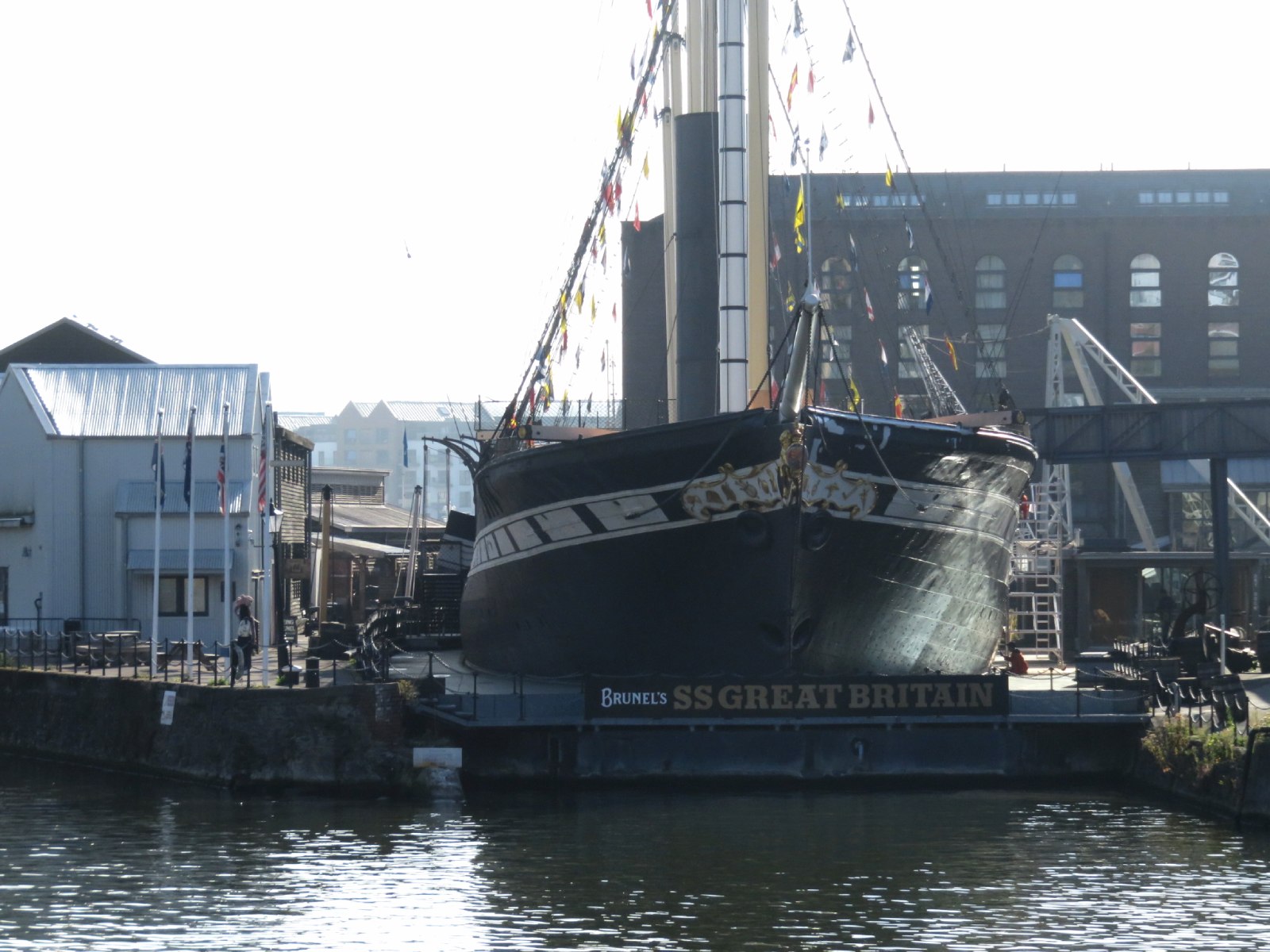


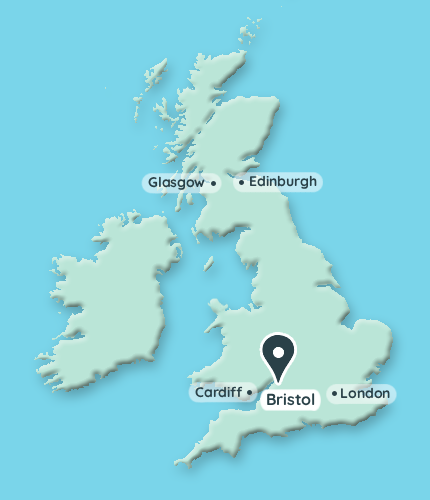
We stopped by the SS Great Britain on our way out of Bristol, before it was open for the day. It was launched in 1843 as the largest ship ever built, and was one of Isambard Kingdom Brunel’s many great engineering feats, along with the Clifton Suspension Bridge.
The SS Great Britain was the world’s first ocean liner, and also the world’s first iron-hulled, screw propelled ship. Measuring 98 metres (roughly the same as the height of the Clifton Suspension Bridge from high water!), it weighed 1930 tons and took four years to build at the Great Western Dockyard in Bristol. It was able to make the crossing faster than other ships as it could carry enough coal to make the whole journey without stopping.
The SS Great Britain has an interesting backstory. Between 1852 and 1875 it voyaged between Liverpool and Australia 32 times, carrying over 600 passengers and crew on each trip - that's an incredible number of people in that space of time. We're fairly certain that one of our Bruce ancestors was on board (see below), along with many people coming to the Australian goldfields. In fact Sovereign Hill's Centre for Gold Rush Collections has a collection of SS Great Britain passenger items.
In the 1880s it was converted to a cargo ship carrying goods between England and America, then abandoned in 1933. In 1970 it was miraculously rescued from its watery grave in the Atlantic Ocean, and mounted onto a pontoon. Tugboats towed it 8,000 miles across the ocean, up the Avon River under the Clifton Suspension Bridge, to the dockyards in Bristol where it was originally built.
Over a period of years the SS Great Britain was restored. It now sits on a glass platform and is open to the public as a museum, alongside the Brunel museum. Various diaries and other artefacts from its passenger liner days are on display. I’d like to come back to Bristol some time to take a closer look.
Family history connection
We’re fairly certain that my great great grandfather Alexander Bruce, on my mother’s side, travelled to Australia on the SS Great Britain in 1852. He originated from Greenock in Scotland (which we also visited – more on that later), and was a grocery and liquor merchant.
Alexander was very into sports and was one of the committee members who wrote and signed the first rules of Victorian Rules Football on 17 May 1859 at the Parade Hotel in Wellington Parade, East Melbourne. The rules are now on display in the MCG museum. He also played both football and cricket for Melbourne and Richmond.
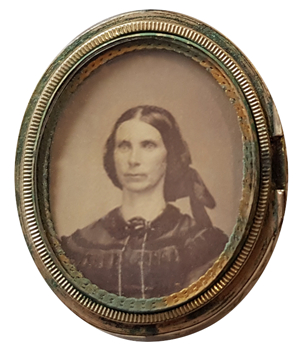
Alexander married Jessie Pettigrew in 1863 in Melbourne (pictured).
Prior to 1860 he set up a merchant business with his sister’s husband Francis Bell called Bell, Bruce & Co. They had several stores around Melbourne and also on the Victorian goldfields – the ad below is from the Camperdown Chronicle newspaper in 1878.

View SS Great Britain, Bristol on Google maps