
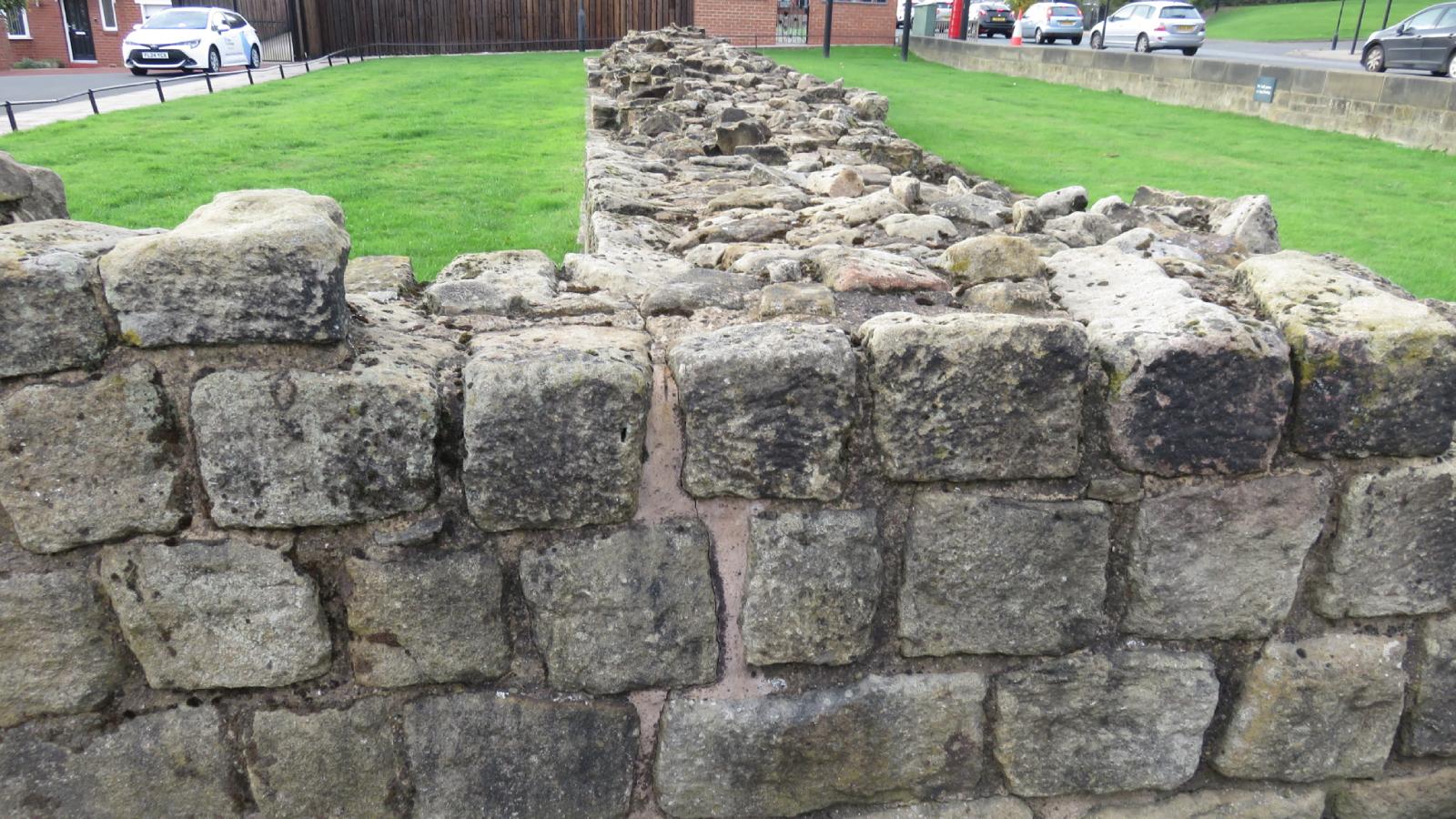
Hadrian’s Wall is a 117km long wall built by the Romans across England as a defence line during the Roman occupation of Britain, which lasted almost 400 years from AD 43–410. It was built for the Emperor Hadrian and ran from Wallsend in the east to Bowness-on-Solway in the west.
Construction began on the wall in AD 122, and it included forts, watch-tower turrets and milecastles. It was about 2.4 metres thick and 3.7 metres high, and up to three storeys in some spots. It took 15,000 skilled Roman craftsmen to build the wall over a six year period.
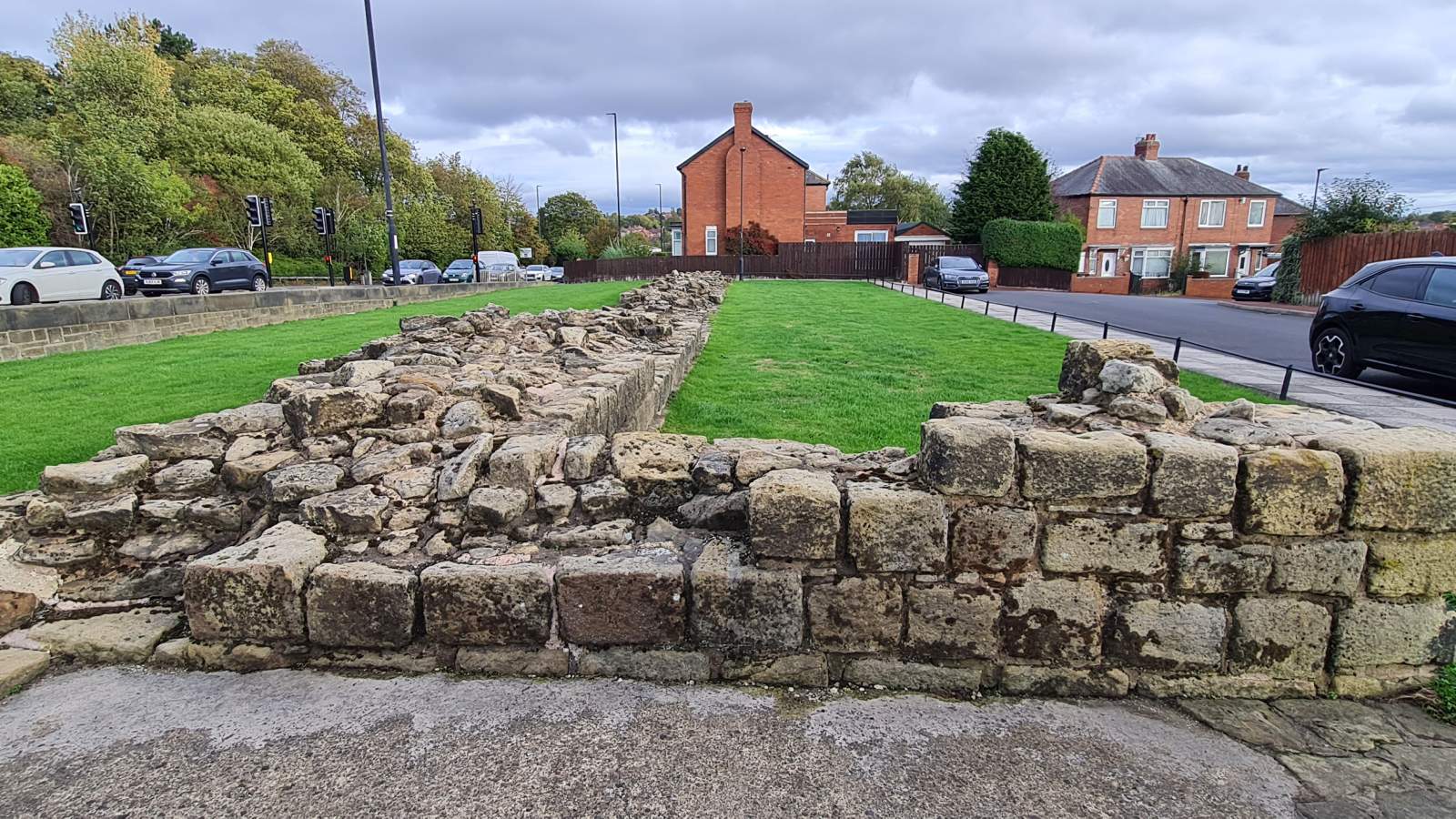
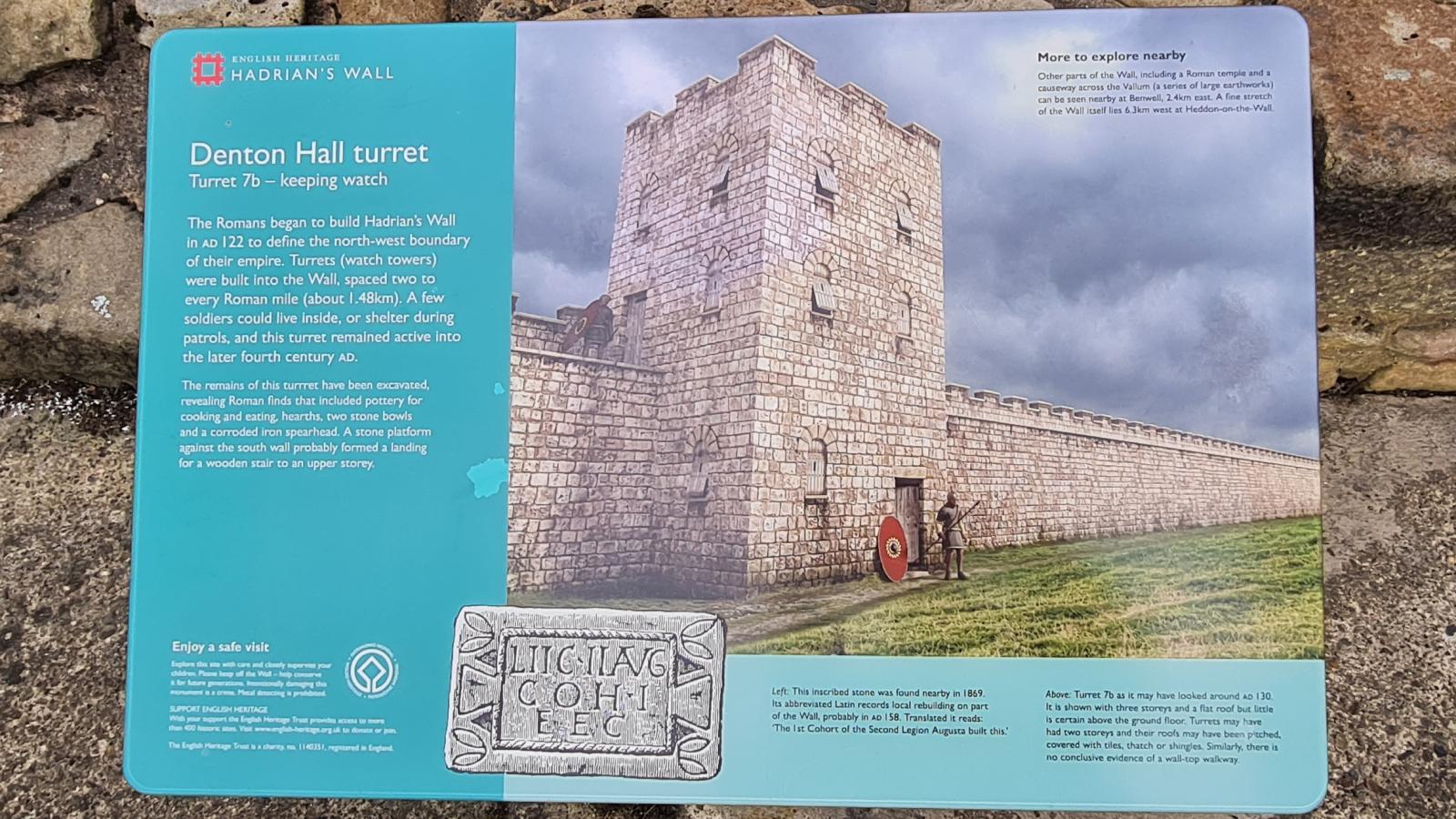
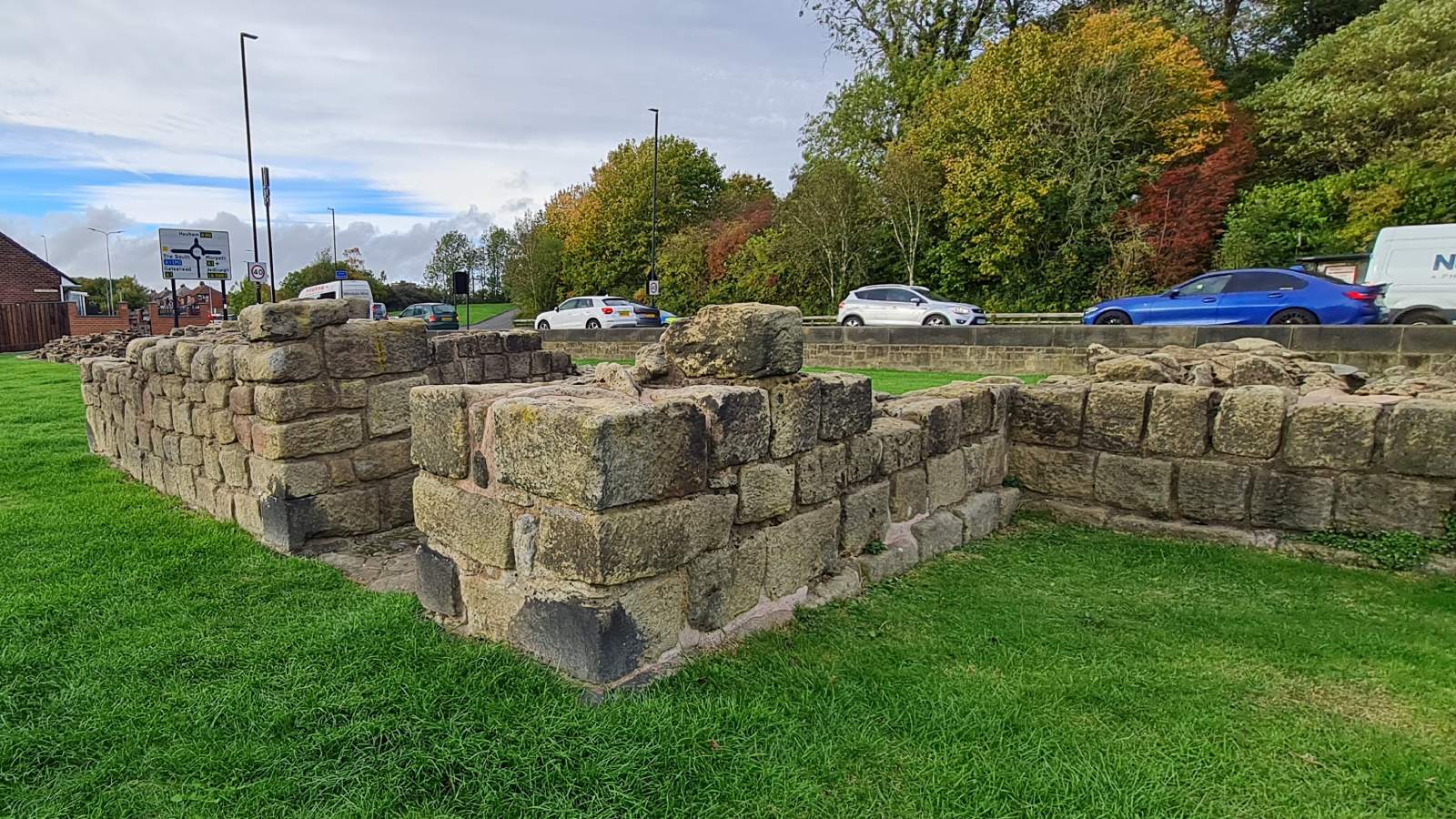
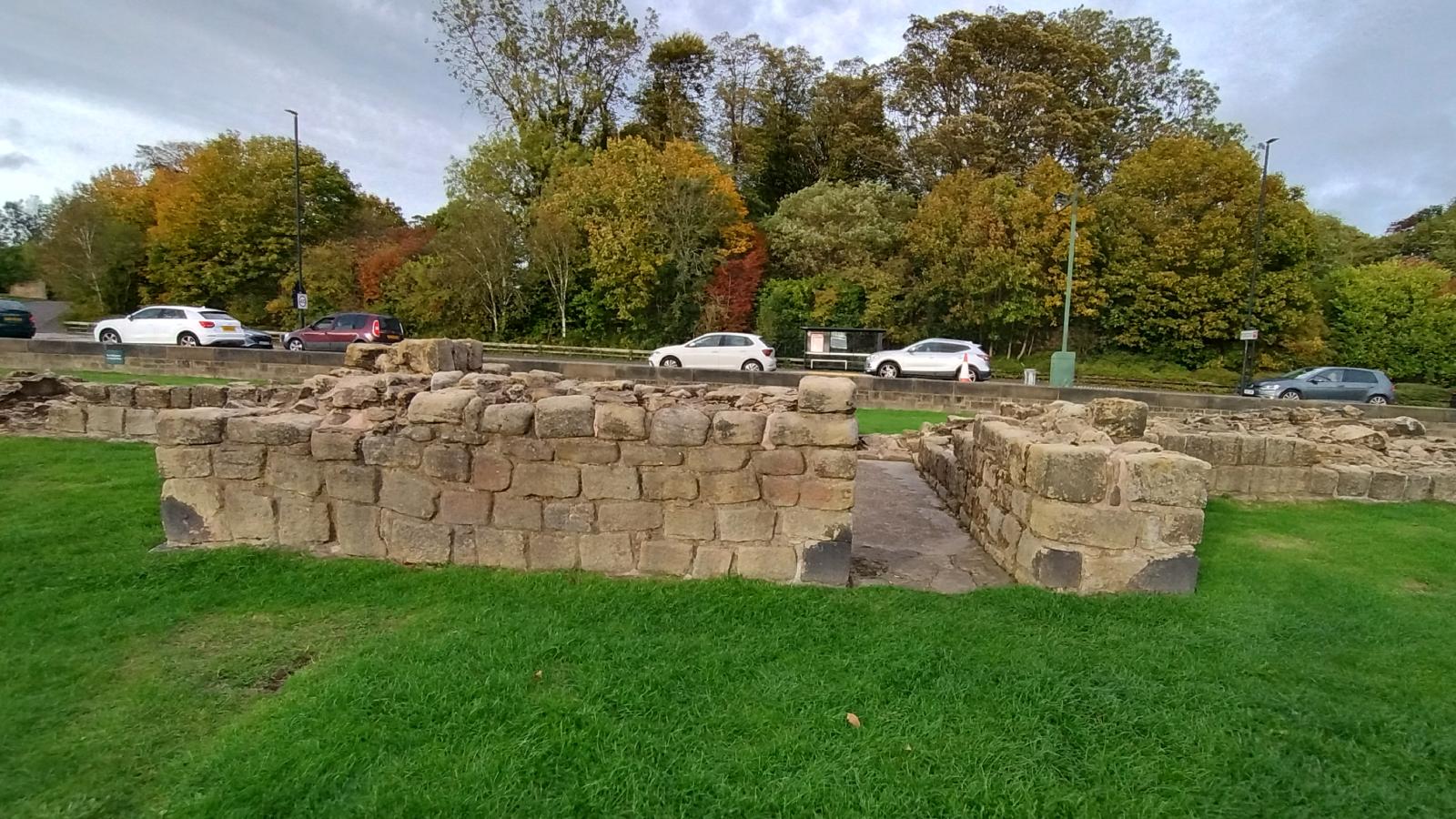
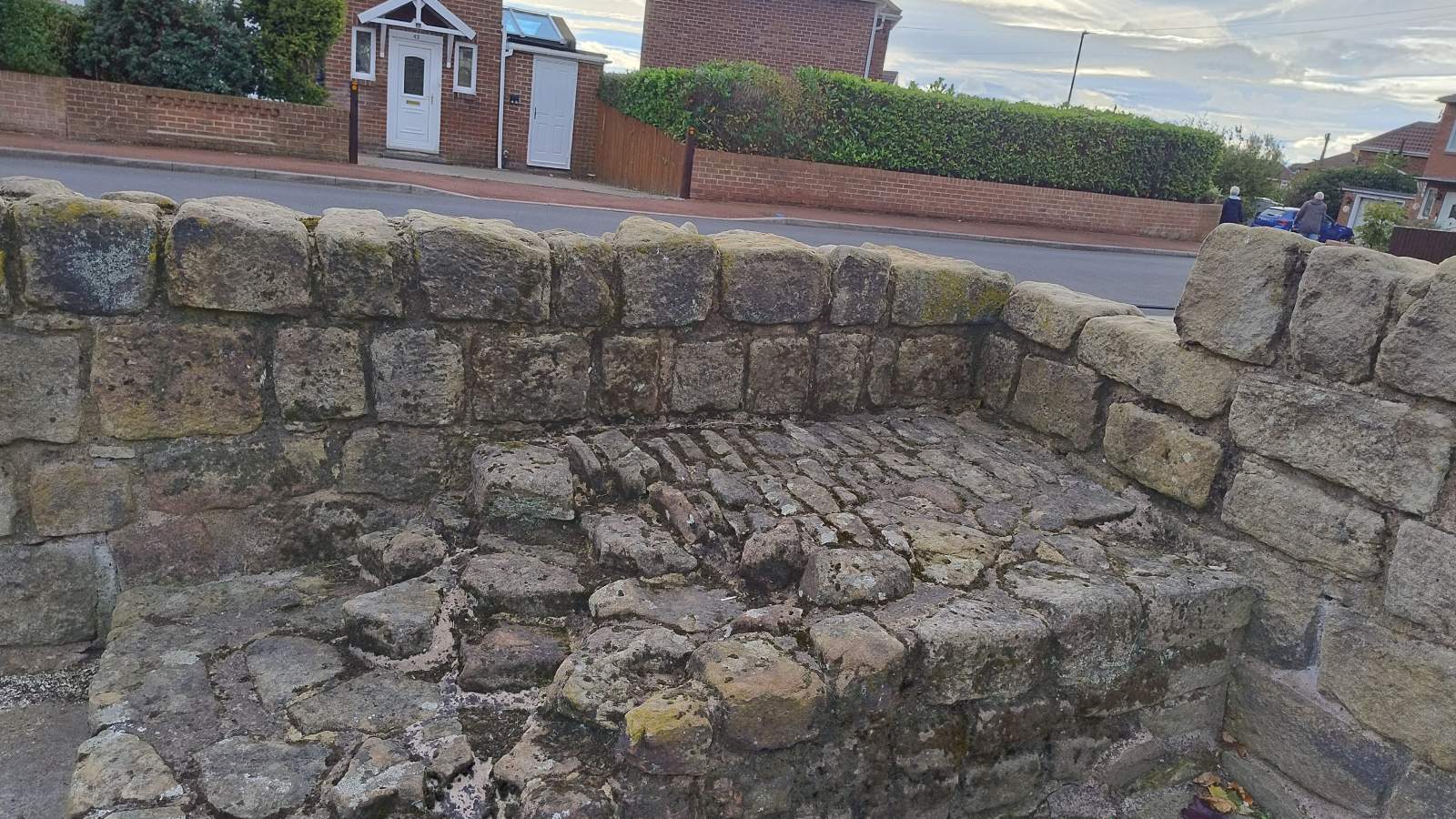
There are sections of the wall that remain intact across England, and this was the closest one to our route – Denton Hall turret in Newcastle-upon-Tyne. Turrets like this housed a small number of soldiers, and were spaced two to every Roman mile – so around 1.48km apart.
Denton Hall turret was active until the late fourth century. It has been excavated, with pottery, heaths, bowls and an iron spearhead being found. It is believed that a stone platform was probably part of some wooden stairs to an upper storey.
Although we were in the middle of suburbia alongside a busy road, it was interesting to try and imagine the Roman sentries in their armour walking along the wall, on the lookout for anything that seemed amiss.
Hadrian’s Wall is a popular walking route across England. I’d like to come back and walk some of it one day.
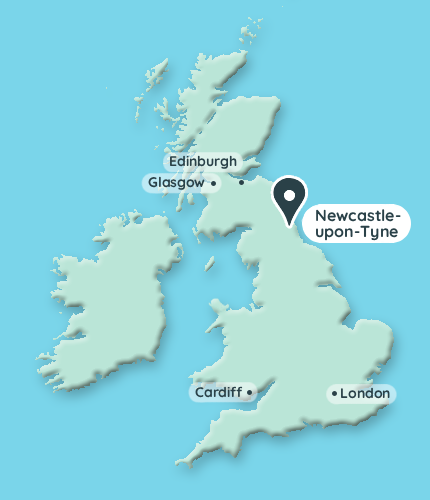
View Hadrian’s Wall - Denton Hall Turret at Newcastle-Upon-Tyne on Google maps